
 By Robby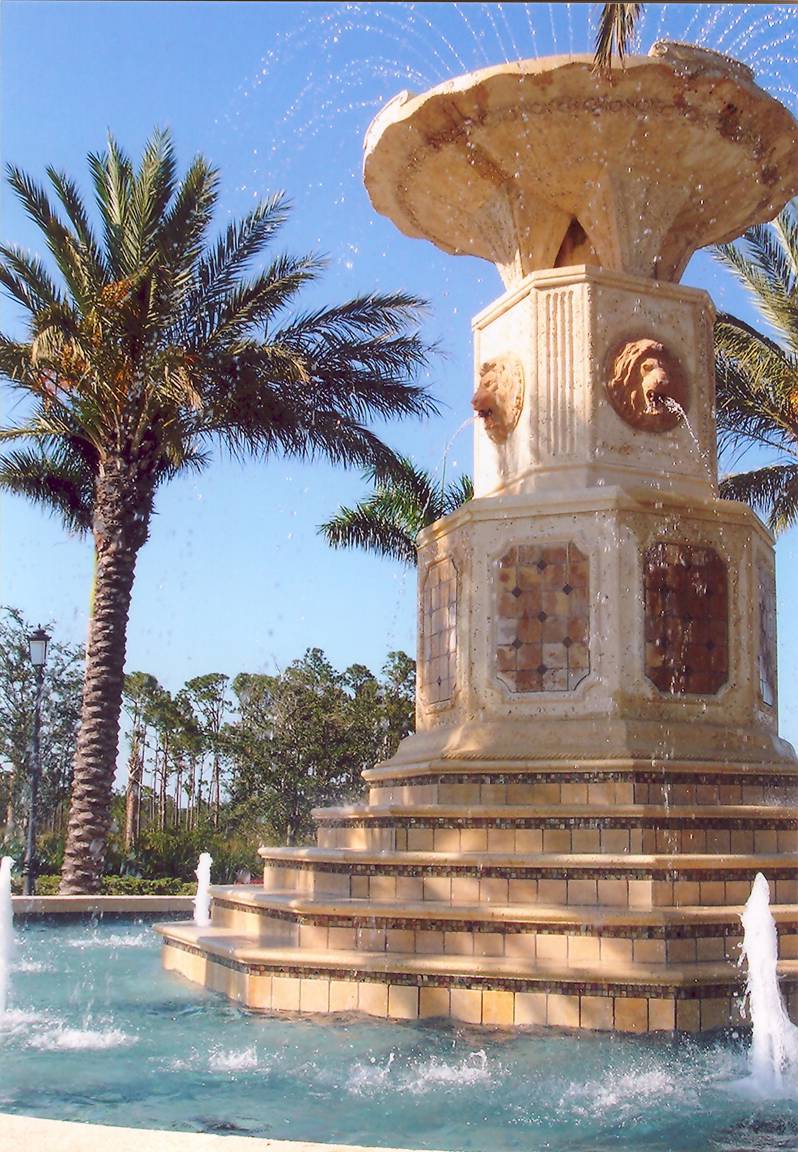
Cast Stone Water Fountain: Choosing the Right One
Last updated: August 31, 2026
There is something about the sight and sound of moving water that can completely change an outdoor space. A small stone water fountain can bring life to a quiet corner of a garden, while a large tiered water fountain can become the main feature of an entrance, courtyard or landscaped area. For many of us, the sound of trickling water creates a feeling of tranquility. I know it does for me.
Over the years, I have been involved with many different cast stone water fountains, large and small, as well as custom water features that included artificial streams and rivers. Many of the photographs in this article are from my own work and include tiered water fountains, decorative pots, wall fountains and installations designed for larger outdoor spaces.
Table of Contents
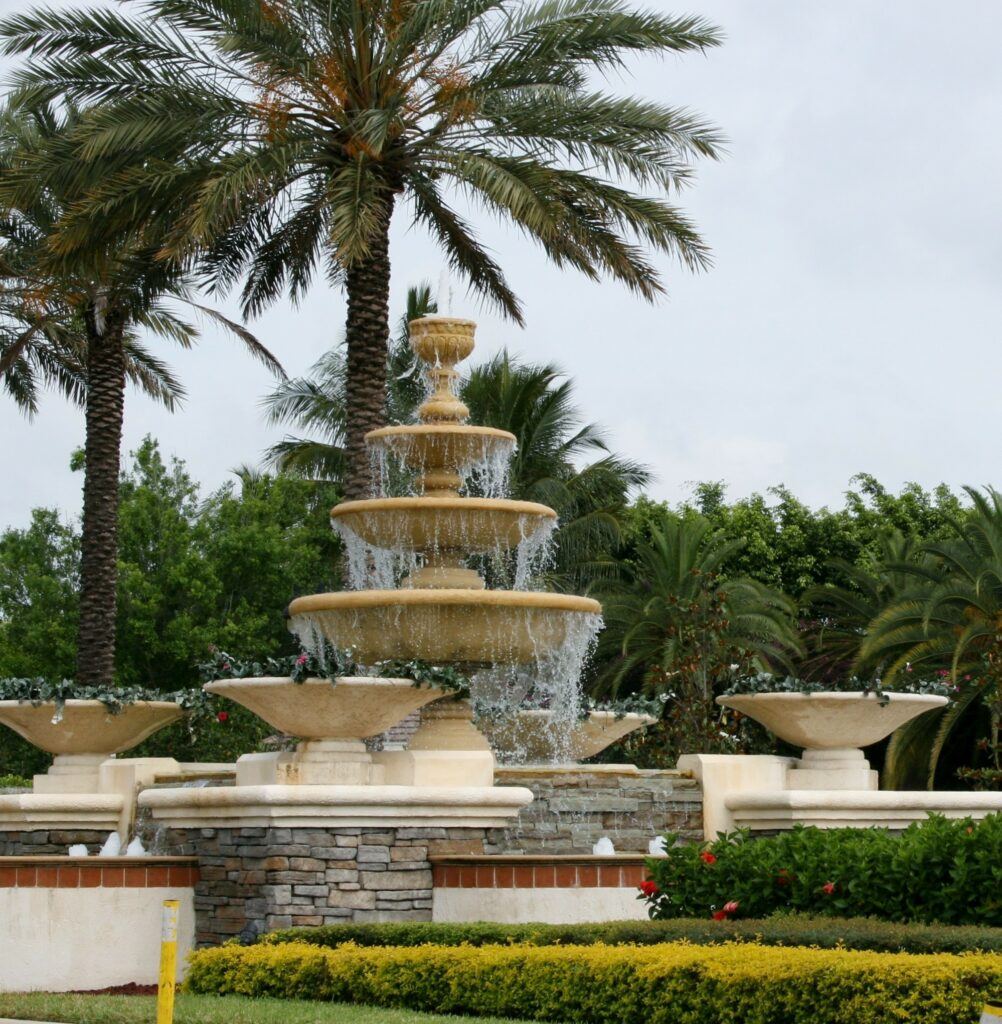
One thing I learned is that a cast stone water fountain should never be chosen on appearance alone. Its size, shape, water movement and finish all need to feel right for the surrounding area. A fountain that looks impressive by itself can appear too small in a large courtyard or overwhelm a more modest garden.
On many projects, my contribution was to suggest, design and manufacture alternatives to what landscape designers had included in their drawings or decorators had envisioned. This often meant adapting the original idea to make it more practical, better proportioned, more suitable for the setting and more cost-effective, particularly for larger builders and developers.
In this guide, I will look at the main types of cast stone water fountains and related outdoor water features. These include tiered, bowl, pot and wall fountains, ponds with fountain heads and spitters, custom designs, and modern fire-and-water bowls. I will also cover choosing the right size and position, controlling the sound and flow of the water, and planning for the pump, water supply, overflow and lighting. Finally, I will discuss finishes, natural aging and the basic care that can keep a water fountain working and looking attractive for years.
This post contains affiliate links. If you make a purchase through these links, I may earn a commission at no extra cost to you
As an Amazon Associate, I earn from qualifying purchases
Why Choose a Cast Stone Outdoor Water Fountain?
Cast stone gives you far more choice than many people realize. It can be used to create everything from small bowls and simple garden fountains to large tiered centerpieces, decorative pots, wall fountains and completely custom water features.
Unlike a water fountain carved from a solid piece of natural stone, cast stone is produced in molds. This allows detailed shapes and matching components to be made repeatedly, which can make a substantial fountain more practical and affordable.
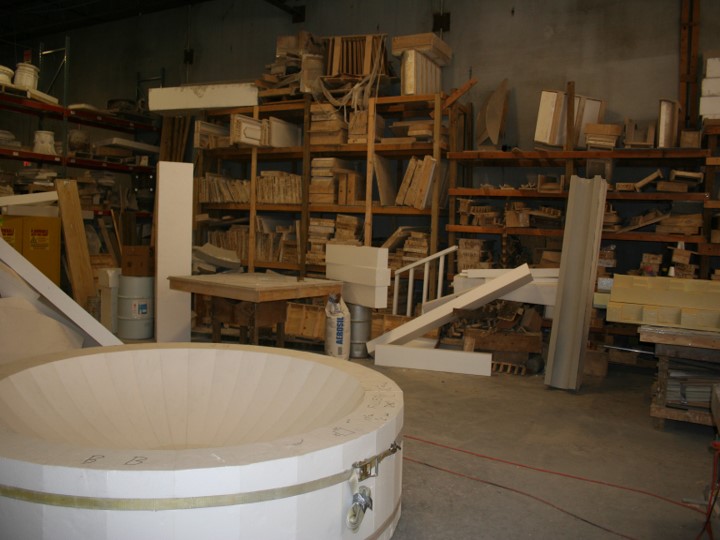
When looking at products today, you may also find similar features described as concrete or glass fiber reinforced concrete, usually shortened to GFRC. These terms do not always mean exactly the same thing as traditional cast stone, but they are commonly used for molded outdoor fountains and fire-and-water bowls with a similar solid appearance. The word “concrete” in a product name does not necessarily mean that it is a basic or inexpensive product. It may simply be the manufacturer’s description of the material and method of construction.
If the design is to be unique, cast stone also gives designers and manufacturers the freedom to alter sizes, combine different pieces or create something specifically for a particular setting. However, original models and molds can be expensive, so the available budget will always influence what is practical.
The wide choice of textures and finishes is another advantage. On several projects, I was also told that having a feature made closer to the project saved a considerable amount in shipping costs, particularly when the original fountain or ornament being considered was made in Italy.
I have always liked the way cast stone matures into an outdoor setting. It can look quite crisp when first installed, but over time the surface often softens and develops more character. The right color and finish, together with surface treatments applied after manufacture, can make a new fountain look as though it has been part of the garden or courtyard for many years.
There are also some much older ways of helping new cast stone lose its freshly manufactured appearance. Yogurt can work wonders. Just writing that makes me smile when I remember where and when I was first told about it. The method deserves a more detailed article of its own, but if you have ever tried it on cast stone or a garden ornament, I would be interested to hear how it worked for you.
Cast stone is heavy, which is usually an advantage once a fountain is properly installed. However, that weight needs to be considered when planning delivery, access and the base it will stand on. This becomes particularly important with large bowls, tall water fountains and multi-piece installations. Even for a residential water fountain, it is worth deciding how the pieces will reach their final position before placing the order.
Types of Cast Stone Water Fountains and Outdoor Water Features
Cast stone water fountains and related outdoor water features are available in many shapes and sizes, but most residential designs fall into a few recognizable groups. The best choice depends on the space available, the style of the property and whether you want the water to create a major focal point or become a quieter feature within the garden.
Tiered Water Fountains
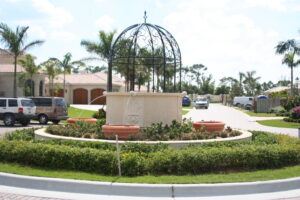
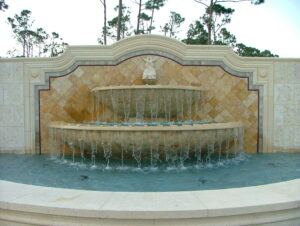
Tiered water fountains are among the most traditional and recognizable designs. Water is pumped from the bottom to the top and then spills from one bowl to another before reaching the basin below. They work particularly well in the center of a circular driveway, courtyard, formal garden or open lawn where they can be seen from several directions.
Many water fountains of this type need a catchment basin, which is, in effect, a small pool surrounding the fountain. Other designs use the lowest tier as the catchment bowl. The recirculating pump is often positioned there, either hidden within the center pedestal of the fountain or submerged beneath the water. An automatic filling system and lighting may also be included, depending on the design.
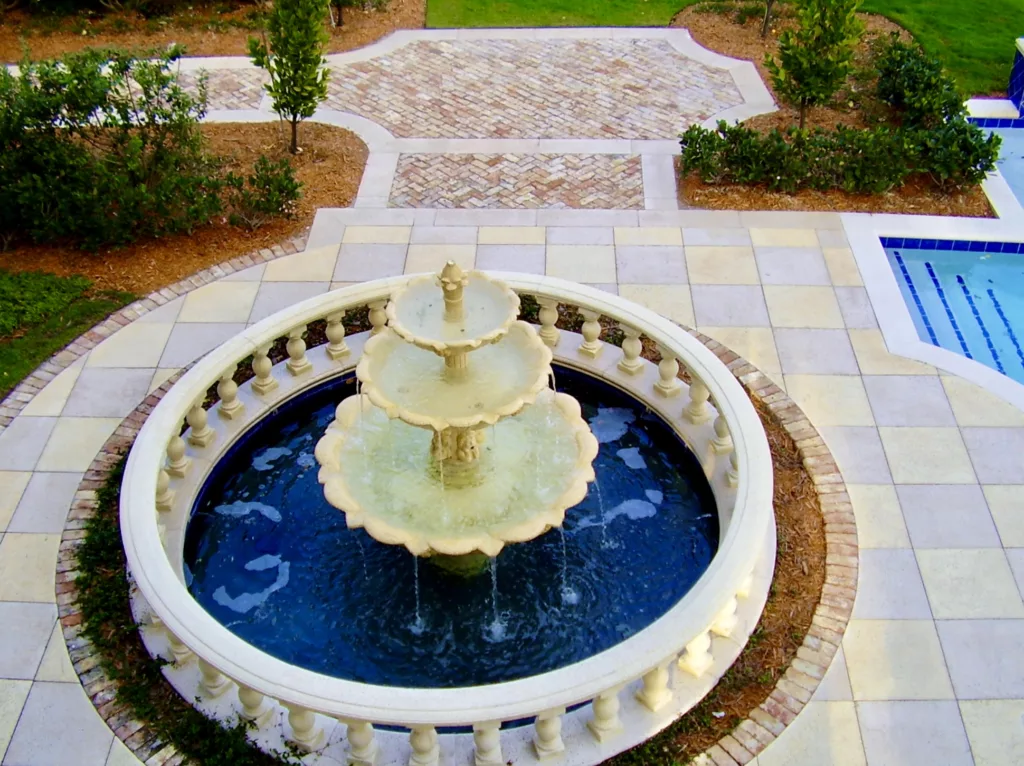
If the lowest tier is also the catchment bowl, make sure it is large enough to catch the water cascading from above. The style of the spillways and the rate of flow will both affect where the water lands. A reasonably strong breeze can easily carry falling water away from the fountain, making a larger catchment bowl necessary and increasing the need for regular refilling.
One suggestion I regularly made to customers planning a tiered water fountain in an exposed location, particularly near the ocean or along the Intracoastal Waterway, was to choose a design with fairly short center pedestals between the bowls. The shorter fall gave the wind less opportunity to carry the water away. Combined with a sufficiently strong and properly adjusted flow, this helped solve most of the wind-related water-loss problems I encountered.
It is also worth considering how close the existing water and electricity supplies are before deciding on the final position. The farther they have to be extended, the more the installation is likely to cost. As a former electrician, I can say that our pencils sometimes became remarkably blunt when pricing this sort of work.
A large four-tiered cast stone water fountain can look impressive against a substantial house or centered in a large lawn. However, I would avoid positioning one too close to deciduous trees because falling leaves can turn fountain cleaning into a considerable maintenance job. The same water fountain that suits a large open setting could also easily dominate a smaller garden. You can also find other information on several topics in our post How To Pick The Best Cast Stone For The Garden.
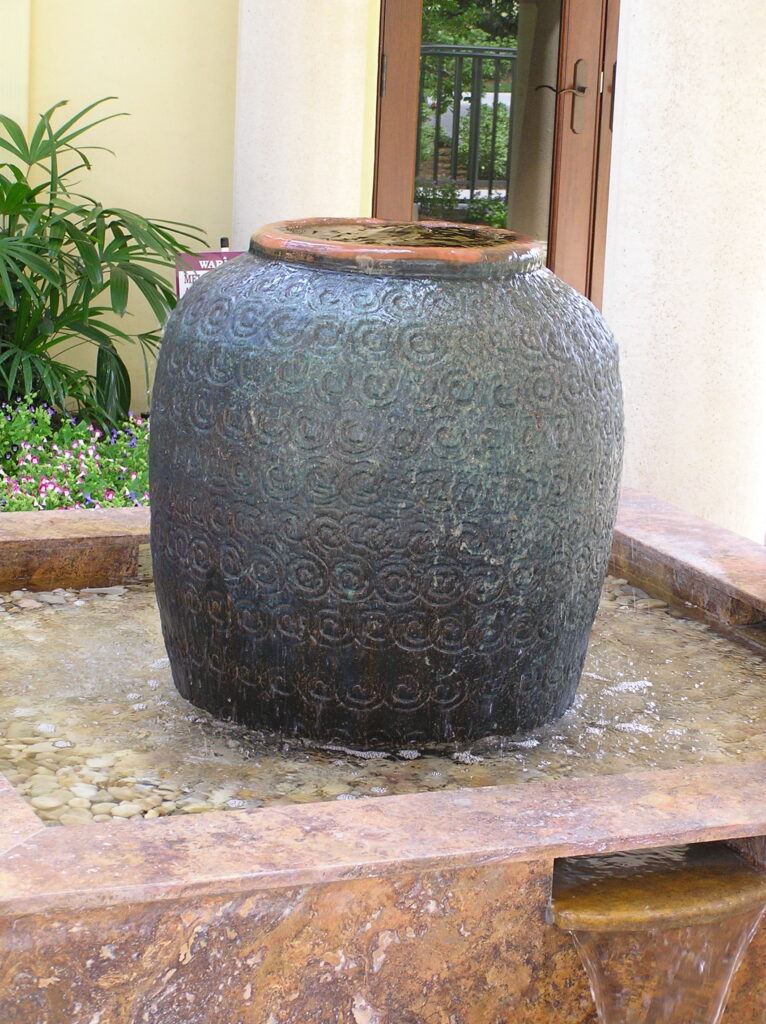
Decorative Bowl and Pot Fountains
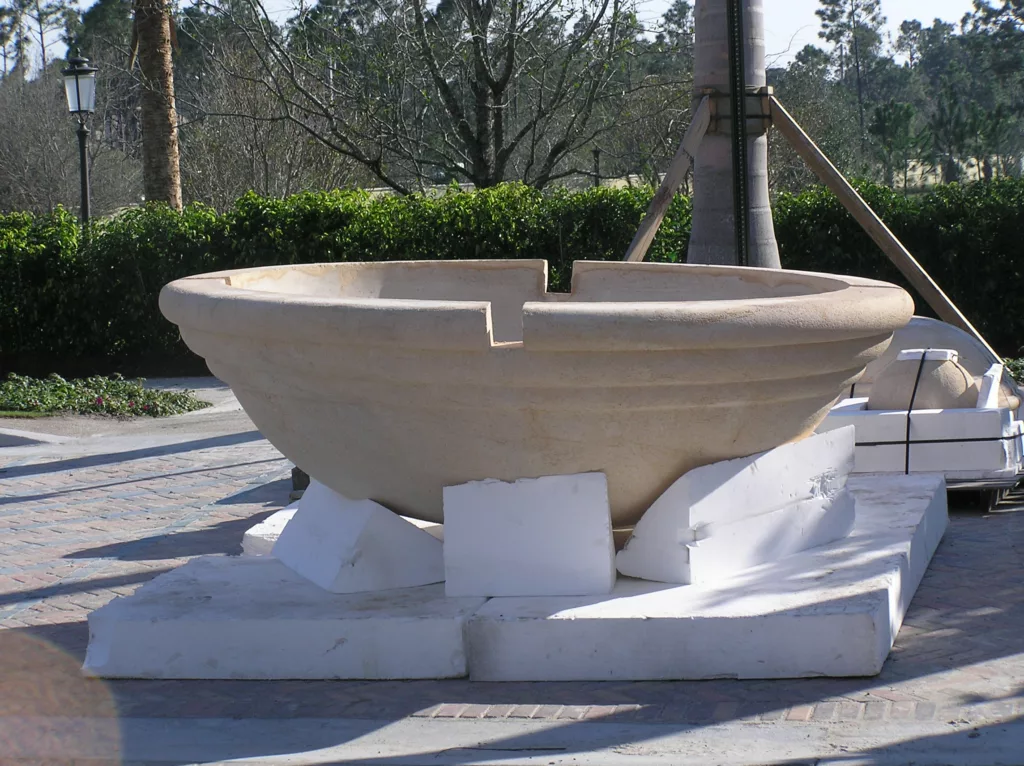
Bowls and decorative pots can create a simpler and more informal water fountain feature. Water may bubble gently from the center or flow over an infinity-style rim. With a hidden catchment basin beneath the surrounding stone, the water can appear to disappear directly into the ground.
These designs can work well near a patio, beside an entrance or among suitable planting, where they become part of the garden rather than taking over the entire setting. A large decorative pot can also provide plenty of character without the height and formality of a tiered water fountain.
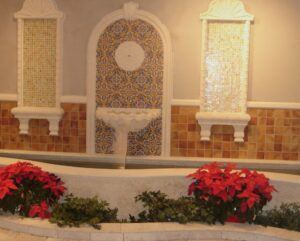
Wall-Mounted Water Features
Wall-mounted water features are useful where ground space is limited or where a blank wall needs more interest. They may include a decorative spout or spitter, a bowl mounted against the wall or decorative molding around the upper part of the feature. The water is collected in a basin beneath it, so many people still refer to these as water fountain.
They are particularly suitable for courtyards, patios and enclosed gardens. The wall provides a natural backdrop and can make the sound of the water more noticeable. I have supplied and fitted many of these against garage walls, where the necessary water and electricity supplies were often easier to reach.
Cast stone components can be heavy, so the wall and mounting method need to provide adequate support. There can also be practical advantages because water and electricity supplies may already be reasonably close to the area. However, the wall surface and the possibility of water splashing or finding its way behind the feature should be considered. In some cases, additional waterproofing may be needed.
Ponds: Water Fountain Spillways and Spitters
A garden pond can become a water fountain feature in its own right by adding a fountain head in the center. Depending on the attachment used, the water may rise as a single jet, form a bell or create a wider pattern before falling back into the pond.
Cast stone spitters can also be positioned around the edge. These may take the form of animals, faces, decorative spouts or other ornaments that send water into the pond. They add movement and sound without needing a large freestanding fountain.
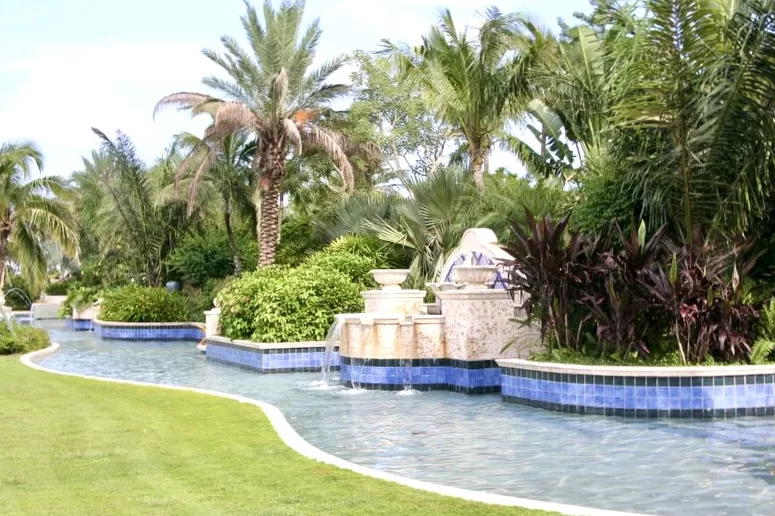
A pond of this type can be expanded with a bowl with a spillway, a small waterfall, stream or babbling brook. Many of these features can be bought in sections and are available in several different materials. I kept a number of designs of this type in my own cast stone product library.
This is one of the styles I particularly like because the different water movements can make the feature feel more natural and allow it to be enjoyed from several parts of the garden. It is also a design that you can continue adding to over time.
On my various trips around the USA, I was always on the lookout for interesting pieces of rock or stone that I could later add somewhere within my own waterscape. These individual additions gradually made the feature more personal and interesting.
As with other water fountains, the amount of water leaving the pond in windy conditions may need consideration. Because this type of water feature is normally at ground level they can be prone to collecting plant and grass cuttings, leaves and other garden debris, which may also affect the water fountain flow to the head or from the pump, so both should remain reasonably easy to reach for cleaning. Many submersible pumps come with the head attached in shallow settings. Choosing suitable evergreen planting may help reduce the amount of seasonal leaf fall and make maintenance easier.
Fire and Water Bowls
There are several ways to introduce a controlled flame into a water fountain feature, and fire and water bowls combine two very different elements within one design. A gas flame burns in the upper part of the bowl while water passes through an integrated spillway and cascades into a pool, basin or reservoir below. There are some incredible designs within this range of products.
Although the flame and flowing water appear to be part of one display, they use separate systems within the bowl. This allows the water to circulate while the gas burner is controlled independently.
Colored cast concrete and GFRC bowls fit particularly well into landscapes that already include cast stone. They can be used as a single focal point or positioned in matching pairs beside a pool, steps, entrance or larger water feature. Copper and other metal versions are also available for a different appearance.There also complete units that can fit into a custom cast piece.
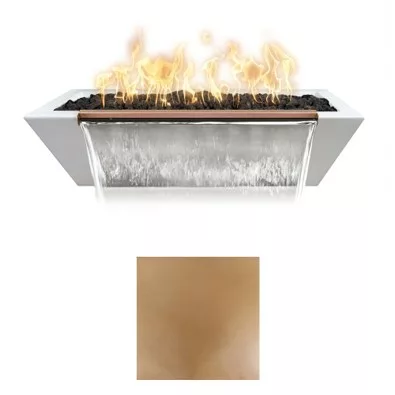
One example is the Maya Linear Concrete Fire & Water Bowl from The Outdoor Plus. Its long rectangular shape gives it a more contemporary appearance, while the built-in spillway creates a broad sheet of water below the flame.
If my budget would stretch that far, I particularly like The Outdoor Plus Olympian round copper bowl with four spillways. The copper should gradually develop a natural patina, adding even more character and ambiance to the water feature over time.
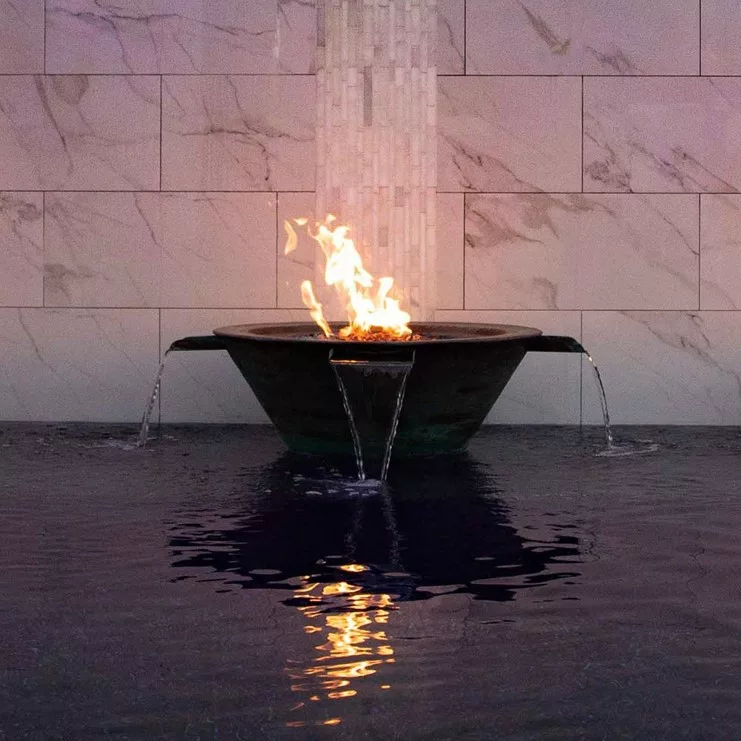
A fire and water bowl needs more advance planning than a straightforward water fountain. The water circulation, drainage or return, gas supply and any electrical controls should all be considered before the surrounding work is completed. The manufacturer’s installation instructions and any local requirements should also be followed. For most homeowners, this should not be treated as a DIY installation.
If you are interested in the fire side of these combined features, my guide to gas fire pits and fire-pit tables explains more about fuel choices, installation and safe use.
If you are interested in the fire side of these combined features, my guide to gas fire pits and fire-pit tables explains more about fuel choices, installation and safe use.
Custom Water Features
A custom feature may combine cast stone bowls, pots, spouts or other pieces to create something that suits a particular garden. An attractive addition can be a rill, sometimes called a runnel, which is a narrow channel carrying water between two parts of the feature.
A custom water feature does not always have to be elaborate. Sometimes using a familiar cast stone component in a different way is enough to create something that feels individual.
I have worked on custom features ranging from courtyard fountains to artificial streams and much larger installations. Although most homeowners will not need anything on that scale, the same basic principle applies: whether the feature blends quietly into the garden or stands proudly as its centerpiece, it should feel deliberately connected to its surroundings rather than simply placed in an available space.
I would also incorporate as many low-maintenance features as reasonably possible. A fountain that constantly needs cleaning, refilling or adjusting can gradually become a chore, and that is often when people begin to lose interest in using it.
Choosing the Right Size and Location
The position of a water fountain can make as much difference as the fountain itself. Before choosing one, stand in the proposed location and look at it from the house, patio, entrance and any other area where it will regularly be seen.
A common mistake is choosing a water fountain from a photograph or showroom display without appreciating its true size. Marking out the width of the basin on the ground can help you picture how much space it will occupy. For a taller fountain, a pole or length of timber can give you a better idea of its finished height.
The fountain should have enough space around it to look comfortable rather than squeezed into position. At the same time, it should not be so small that it disappears into the surrounding planting, unless you are deliberately trying to create the look and sound of a hidden stream. I would not lose a fountain in the center of a large lawn either. If it is intended to be the focal point, it needs enough presence to do the job.
Consider the prevailing wind and how far it may carry the water beyond the basin. Any water flowing very slowly over part of or the entire edge of a bowl may form a thin curtain, and that can be a favorite target for the wind.
Water landing outside the basin can leave paving wet and create a slip hazard. It can also increase water loss and affect nearby plants or outdoor furniture. Moving the water fountain even a short distance or adjusting the water flow may make a considerable difference.
A garden hose supported at roughly the proposed height, with a suitable nozzle attached, can provide a simple indication of how the wind behaves in that location. It will not reproduce the finished fountain exactly, but it may reveal an obvious problem before any work begins.
The water fountain will also need a firm, level base capable of supporting the complete weight of the fountain and its water. Ask the supplier for the dry weight and approximate water capacity. One US gallon of water weighs about 8.34 pounds, or 3.78 kilograms, so a large basin can add considerable weight when filled.
Access for delivery should also be planned before ordering, particularly if the route includes narrow gates, steps, soft ground or restricted space for lifting equipment. You may have to plan for several strong helpers.
Finally, think about how the water and power will reach the water fountain and how easily the pump can be reached for cleaning or replacement. If a concrete base is being installed, any sleeves or service routes needed for the water line, pump cable and lighting should be planned before the concrete is poured.
In some low-voltage water fountain systems, the manufacturer’s pump cable and water tubing may be able to pass through the same larger protective sleeve, with the power supply positioned some distance away. Other installations may require separate routes. This should be decided according to the equipment manufacturer’s instructions and local electrical requirements.
Hiding everything may create a neater appearance, but it should not make routine maintenance unnecessarily difficult.
Think About the Sound of the Water
If you are like me, I find the sound of trickling water very relaxing, after a hard days work sitting by myself, close to a water feature with a refreshment. It destresses me. The sound of the water is one of the main reasons many people choose a fountain, but it can be difficult to judge from a photograph. A gentle trickle may suit a quiet patio, while a larger cascade can create enough sound to soften nearby traffic or other background noise.
The finished sound depends on the route, how far the water falls, how much water is moving and what it lands on. Water flowing quietly over the edge of a bowl will sound very different from several streams dropping into a deep basin.
The surroundings also make a difference. Walls, enclosed courtyards and covered areas can reflect and increase the sound, while an open garden may allow it to disappear more easily. I would consider where people will normally sit, whether bedroom windows are nearby and whether the fountain will still feel relaxing after it has been running for several hours. With any of my fountains or water feature that went through my portfolio, I always had a shut off switch in the house.
An adjustable pump can be useful because it allows the flow and sound to be reduced or increased after the fountain is installed. However, the fountain still needs enough flow for the water to reach its intended spillways and return to the basin.
The aim is not always to create the loudest or most dramatic effect. For most residential cast stone fountains, the best result is water that can be heard and enjoyed without making conversation difficult or becoming irritating over time.
Choosing the Pump and Controlling the Water Flow
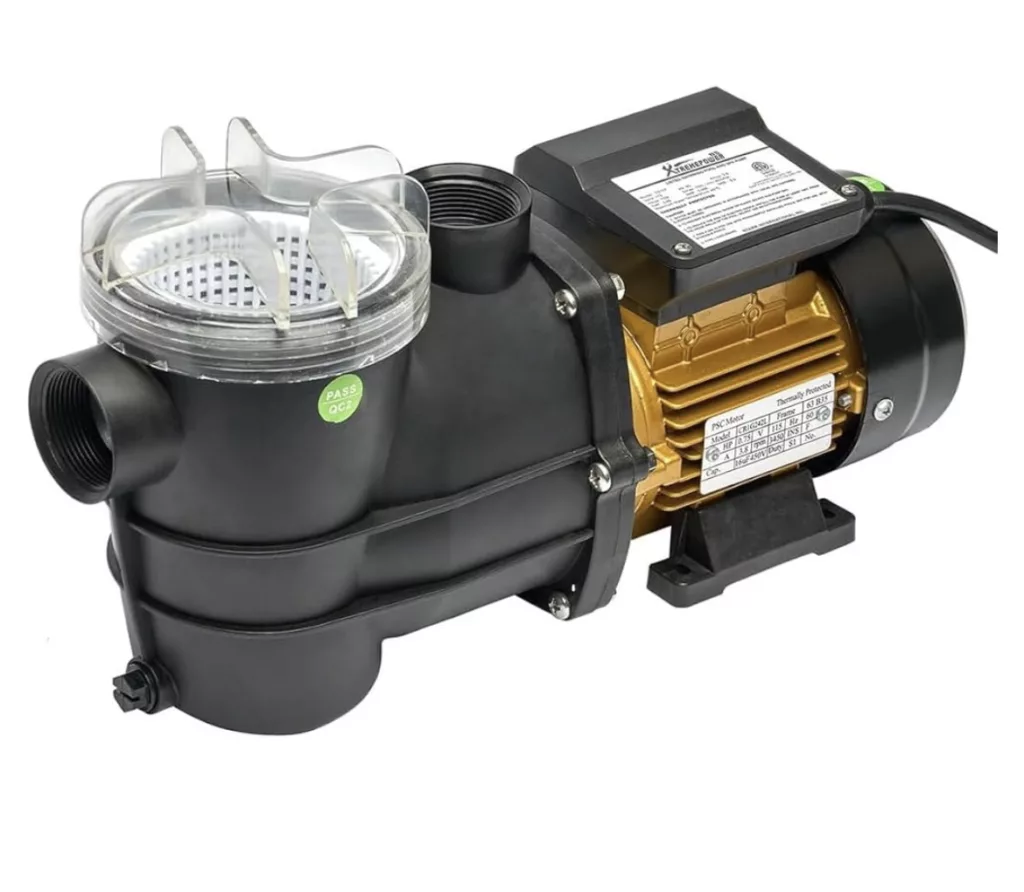
The pump is the working heart of any recirculating fountain. It needs to move enough water to create the intended effect, but simply choosing the pump with the largest advertised flow rate is not always the answer.
Pump flow is usually measured before the water has been lifted through the fountain. As the water travels upward, the available flow reduces. The height from the pump to the highest outlet, together with the length of the tubing and the number of bends, all make a difference. This vertical distance is commonly referred to as the head height.
This becomes particularly important with tall tiered fountains, several spitters or features where one pump supplies more than one outlet. If the pump is too small, the upper bowl may only dribble, a fountain head may not form its proper pattern and the water may not spread evenly around the edge of a bowl.
For most residential fountains, I would prefer a pump with adjustable flow or a suitable method of controlling it. This provides some flexibility after installation and allows the appearance and sound of the water to be adjusted. It may also help in windy conditions when a high flow sends too much water outside the basin.
The pump needs to remain reasonably easy to reach. Pumps and their intake screens or separate filters occasionally need cleaning, particularly where leaves, algae or other debris can enter the water. A beautifully hidden pump is not much use if half the fountain has to be dismantled every time it needs attention.
A timer can prevent the fountain from running when nobody is there to enjoy it, while some pumps and control systems offer additional automatic features. Any timer, connection or control used outdoors should be suitable for the fountain system and its location.
Choosing the exact pump can become a subject of its own, especially for taller or more complicated fountains. Check the pump manufacturer’s flow chart at the required lifting height rather than relying only on the largest number printed on the box. I will cover pump selection and sizing in more detail in a separate guide.
For a typical residential fountain, I would usually look first for a suitable low-voltage pump with a long factory-fitted cable. The extra cable can make it easier to remove the pump for cleaning and may provide more choice when positioning the transformer, subject to the manufacturer’s installation instructions.
Plan the Water Inlet and Overflow
Not every fountain or pond needs a permanent water inlet, but most will need topping up because water is gradually lost through evaporation, splashing and wind. Nothing spoils a carefully designed water feature quite like seeing a garden hose draped over the side whenever more water is needed.
A concealed filling point can make this much neater. Larger features may also use an automatic fill valve to maintain the water at a chosen level. Whatever arrangement is used should remain accessible for adjustment or repair, and any permanent connection should meet local plumbing requirements.
Another simple option is to have a short custom-length hose that can be connected to a nearby outdoor faucet when the fountain needs filling and then put away afterward. The faucet should have built-in backflow protection or be fitted with a suitable backflow prevention device.
An overflow is equally easy to overlook. Heavy rain, an overfilled basin or a problem with an automatic inlet can raise the water beyond its intended level. A properly positioned overflow allows the excess water to escape in a controlled direction rather than flooding surrounding paving, planting or the foundation beneath the fountain.
The overflow outlet should discharge somewhere suitable and remain accessible enough to check for leaves or other blockages. At the outlet end, a small trap or turned-down arrangement, similar to that used with some air-conditioning condensate lines, can help discourage insects, slugs and other small visitors from traveling back through the pipe. It should not restrict the overflow and should remain easy to inspect and clean.
Both the inlet and overflow are much easier and less expensive to plan before the fountain and its surrounding work have been completed.
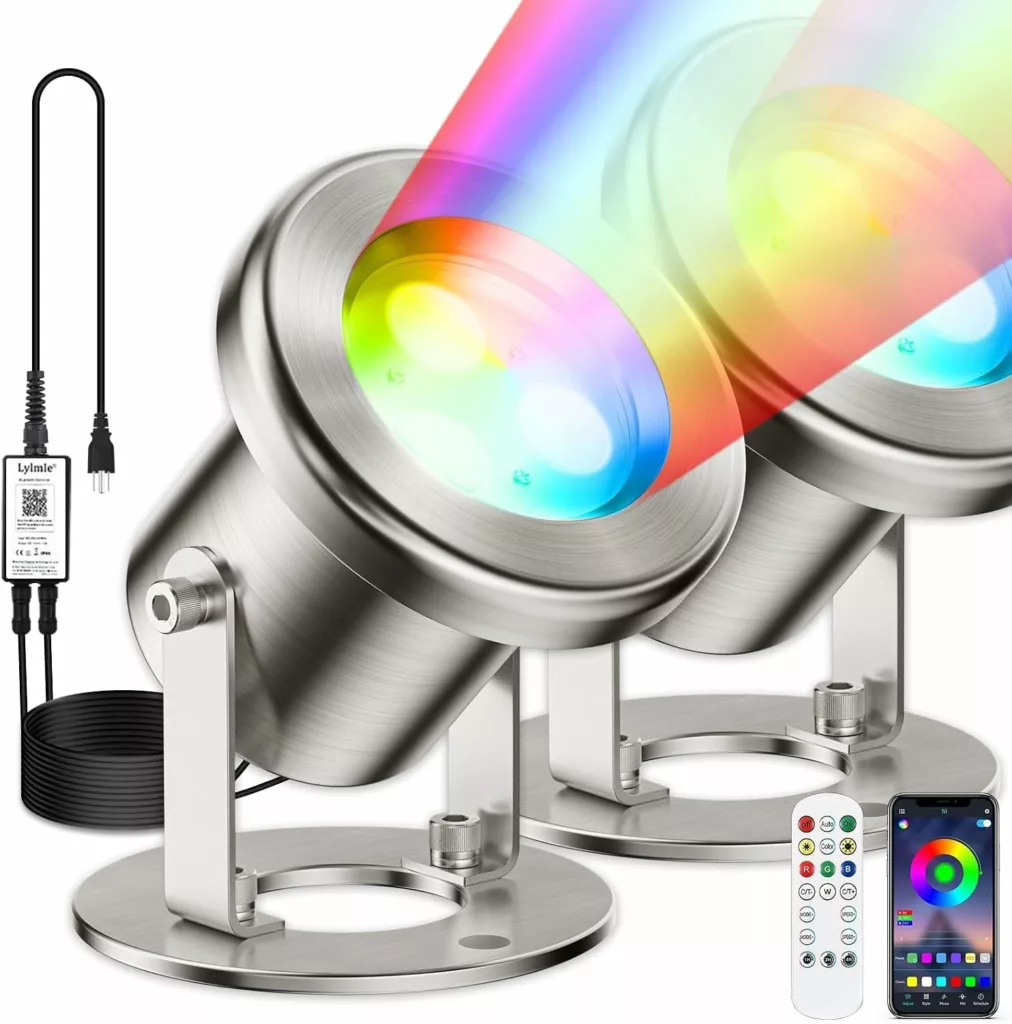
Adding Fountain Lighting
Lighting can completely change the appearance of a fountain after dark. A feature that almost disappears in the evening can become one of the most attractive parts of the garden when the water, bowls and surrounding stone are lit carefully.
One useful option is a small submersible spotlight with a weighted base and flexible cable. These sit inside the lower basin and can be moved or angled upward much like a small floodlight. They allow you to experiment with the position until the water and fountain are illuminated without the light shining directly into people’s eyes.
Other options include light rings fitted around a fountain head, small lights beneath spillways and fixed lights built into the surrounding stonework. Warm white light can suit traditional cast stone, while color-changing LEDs may work well with more contemporary fountains or for occasional effects.
In the past, I even built fiber-optic strands into cast stone pieces during manufacture. The individual points of light were positioned within the casting, while the long fiber-optic tails were grouped together and led back to a common external light source.
LED lighting has changed this area considerably. Modern LED fountain lights generally use less electricity and produce less heat than the older halogen equivalents. Many are supplied as low-voltage systems running from a transformer positioned away from the water.
Solar lighting has also come a long way. Improvements in LED technology, solar panels and rechargeable batteries can make it a useful option where running a cable would be difficult. Its performance will depend on the amount of sunlight reaching the panel, the battery capacity and how many hours of lighting are expected.
Many of us would set the timer to switch the fountain lights off before midnight rather than leave them running all night. For that sort of use, a properly selected solar system may provide enough operating time. Performance may be more limited in heavily shaded gardens or farther north, particularly during winter.
I remember some earlier fountain systems where the 12-volt pump and submersible lights were supplied through the same transformer or formed part of a combination unit. Similar complete systems are still available, but separate pumps and lights should only share a transformer or control unit when the manufacturer confirms that they are compatible and the transformer has enough capacity for both.
A light described merely as weather-resistant or waterproof is not necessarily suitable for permanent submersion. Any fixture placed beneath the water should be designed and approved for that use, whether it is powered by a transformer or solar system. Its cables, connectors and power supply should be installed according to the manufacturer’s instructions.
Timers, dusk-to-dawn sensors, remote controls and some smart systems can make the lighting easier to use. As with the pump, the cables and connections should be planned before the fountain and its surrounding work are completed, while still remaining accessible for maintenance or replacement.
I would avoid using too many lights. A few carefully positioned fixtures usually show the movement of the water and the shape of the fountain more effectively than lighting every surface.
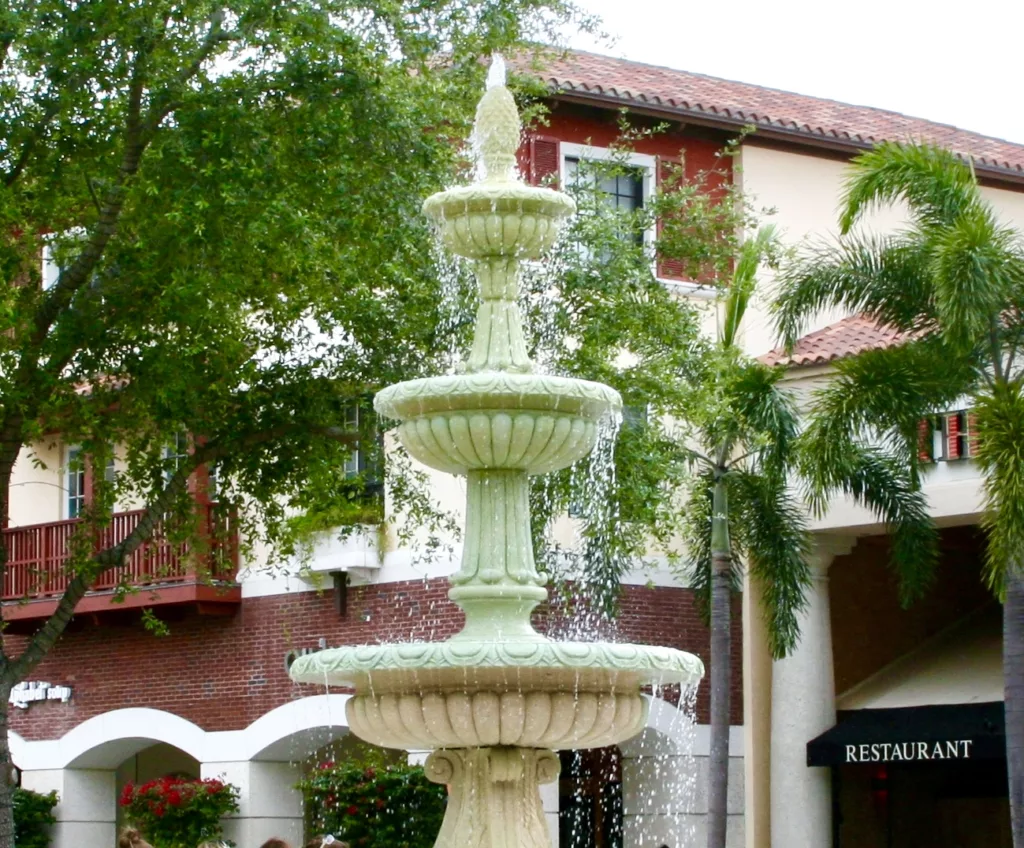
Choosing a Color, Finish and Patina
The color and finish of a cast stone water fountain can make a considerable difference to how well it fits into the garden. A pale limestone appearance may suit a traditional courtyard, while warmer earth colors can blend more naturally with planting, brickwork and older paving. Darker finishes often give a water fountain a stronger presence, particularly against a light-colored wall.
Depending on the manufacturer, a standard color may be added during production, while some manufacturers apply additional finishes after the fountain has been cast. Surface treatments can include stains, washes and applied patinas that settle into the detail and help emphasize moldings, carvings and textured areas. They can also take away some of the crisp, newly manufactured appearance.
A color added at the time of casting will usually appear darker when the surface is wet. If possible, ask to see a physical sample both dry and damp rather than choosing entirely from a photograph or computer screen. There may also be some natural variation between individual cast pieces, especially where secondary finishing processes are involved, many of which are applied by hand.
Applied bronze- and copper-colored finishes can bring warmth to cast stone and work particularly well on decorative pots, wall fountains and more formal designs. A second coating or treatment can produce a very convincing patina. I have used these effects to give cast pieces the appearance of metal without losing the weight and character of the original material. I have even had finials and other ornamental pieces with these finishes stolen because the thieves apparently thought they were solid copper or bronze.
The correct products need to be used because a finish that looks good on dry garden ornamentation may not perform as well where it is constantly exposed to moving water. Water, sunlight and general weathering will continue to change its appearance after installation. Mineral deposits may form around spillways and waterlines, while shaded or damp areas may gradually develop a more aged appearance. Some people like this natural change, while others prefer to keep the fountain looking closer to its original finish.
If you want an unpainted water fountain to remain as clean as possible for as long as possible, applying the correct sealer once the material is ready is the best method I know. Ask the manufacturer how long the fountain should be allowed to cure and which sealer is suitable. Pressure washing is not always the best answer with man-made materials because excessive pressure may damage the surface, strip an applied finish or, worse still, expose the aggregate used in the manufacturing process.
Before using any cleaner, stain, paint or sealer, check that it is suitable for the fountain material and for continuous contact with water. This is particularly important where birds, pets or pond life may visit the feature. It is also worth asking the manufacturer whether applying another product could affect the original finish or warranty.
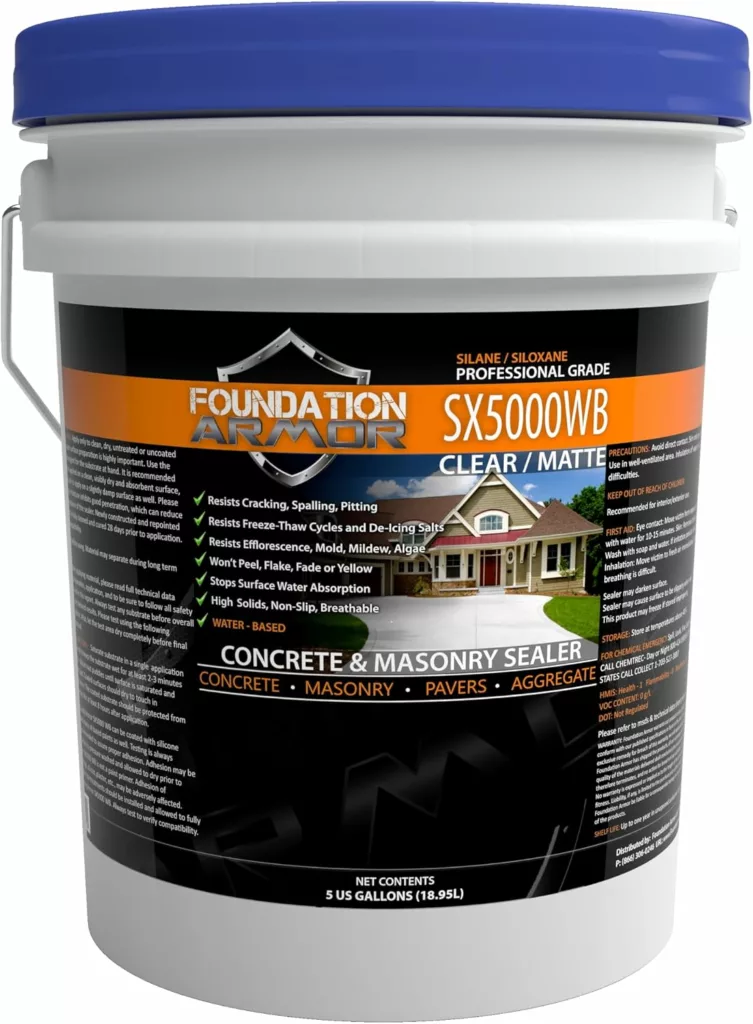

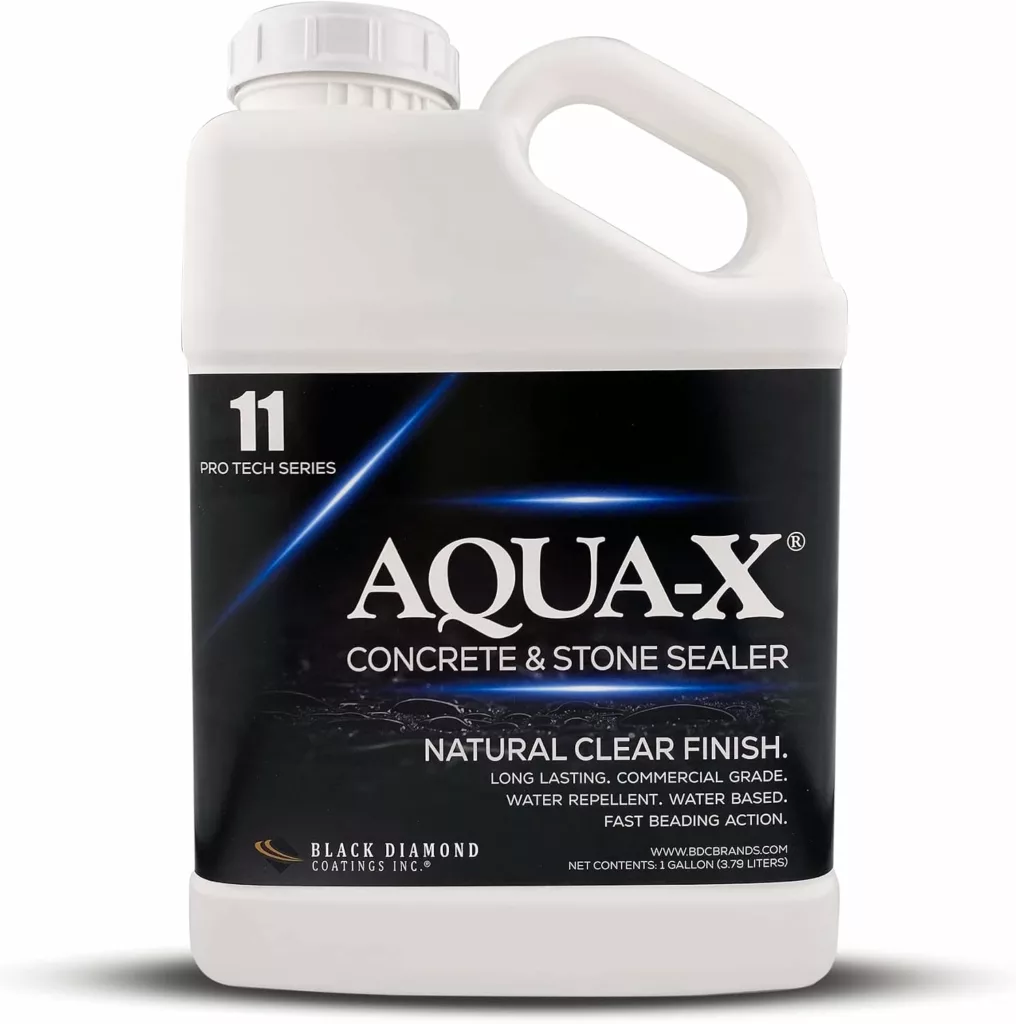

The two products shown above are not the same brands I used in the past, but they are the same type of penetrating sealer and are intended to provide the protection I would look for on cast stone. Applied once the new cast stone has cured, these sealers can considerably slow natural aging, prevent dirt and debris from becoming firmly attached to the surface and make gentle cleaning much easier. This helps preserve the original appearance, which is particularly important with colored or specially finished cast stone.
Both products are readily available through Amazon, where you can compare the current prices, container sizes, specifications and customer reviews before choosing the most suitable one for your project.
Basic Care and Seasonal Maintenance
A water fountain is easier to enjoy when routine maintenance has been taken care of from the beginning. The task does not need to be complicated, but ignoring leaves, dirt and falling water levels can eventually affect the pump, the flow of water and the appearance, and the enjoyment of the fountain.
Check the water level regularly, particularly during hot, dry or windy weather. The pump needs enough water around it to operate correctly and should not be allowed to run dry, even though many pumps do have run-dry sensors theses days. If the level begins dropping much faster than usual, look for excessive splashing, a blocked inlet, a leaking connection or water escaping over one side of a bowl. Leaks are normally easy to spot on a dry day.
Leaves and other debris should be removed before they reach the pump intake or block a fountain head, spitter or spillway. Pump screens and filters will also need occasional cleaning to avoid blocking the fountain head or any spitters. Always switch off and disconnect the power before reaching into the basin or removing the pump for attention.
Algae and mineral deposits are more likely to appear in some fountains than others, depending on the water, sunlight and surrounding conditions. Use cleaning products intended for the fountain material and follow the manufacturer’s instructions. If birds, pets or other wildlife may drink from the fountain, make sure any treatment added to the water is suitable for that situation.
Cold-weather preparation is particularly important when you live in frost prone zone. Water left inside bowls, pipes, pumps or small openings may freeze and expand, possibly damaging the fountain or its fittings. Where freezing conditions are expected, follow the fountain and pump manufacturers’ instructions for draining the system, removing or protecting the pump and covering the feature if recommended. Do not assume that a heavy cast stone water fountain can be left full simply because the material itself appears substantial.
This is another reason to think about pro-active preparation for maintenance before installation. A drain point that can be reached, a removable pump and fittings that do not require half the fountain to be dismantled can make seasonal care considerably easier. Insulation to hidden pipes, sealing surfaces, are other possible points.
Before You Order an Outdoor Water Feature
Before placing an order, ask the supplier for enough information to plan the complete installation rather than concentrating only on the appearance of the fountain. A few answers obtained now can prevent expensive surprises when it arrives.
Check the following:
- The overall height and width, including the catchment basin.
- The dry weight, approximate water capacity and type of base required.
- The size and weight of the largest individual piece.
- Whether the delivery route is wide and firm enough for every component.
- Who is responsible for unloading and whether lifting equipment will be needed.
- Whether the pump is included and suitable for the required head height and water effect.
- Which tubing, fittings, fountain heads, lights, transformers or controls are included.
- The required water supply, overflow, drainage and electrical arrangements.
- Whether the basin is large enough for the expected flow and exposure to wind.
- The available colors and finishes, preferably viewed both dry and wet.
- The recommended cleaning, sealing and cold-weather procedures.
- The expected production time, delivery arrangements, warranty and availability of replacement parts.
For a fire-and-water bowl, also confirm the required fuel, burner and ignition system, water connections and controls, together with which parts of the installation need to be completed by qualified trades.
Final Thoughts
Finally, ask what is not included. A water fountain advertised as a complete feature may still need a suitable base, catchment basin, pump, transformer, plumbing fittings or installation equipment. It is much better to know that before ordering than when several hundred pounds of cast stone are sitting beside the driveway.
A cast stone water fountain can remain part of a garden for very many years, so it is worth taking time over the early decisions. Measure the space, consider the wind, ask what is included and make sure the practical parts can still be reached once everything has been installed.
I hope this guide helps you make those choices. If you are planning a water fountain or another outdoor water feature and there is something I have not covered, please leave a comment or send me a message. I would also be interested to hear about features you have already created and, of course, whether anyone else has tried the old yogurt method.
Author Rob
Craft It All
the article tells us in detail about the Stone outdoor water fountains, often referred to as “The Trickle Effect,” They offer more than just a beautiful addition to your garden or outdoor space. They can transform an environment with their soothing sounds and visual appeal, providing numerous benefits to both the ambiance and functionality of the space. Incorporating stone outdoor water fountains into your landscape not only elevates the aesthetic appeal but also contributes to a serene and tranquil environment. Whether you opt for a grand, tiered fountain or a smaller, more intimate design, the benefits of these water features are manifold. They enhance mental well-being, attract wildlife, and offer a versatile range of designs to suit any taste. By sourcing the right materials locally, you can ensure the best quality for your water fountain project, creating a beautiful and inviting outdoor space that you’ll enjoy for years to come.
Questions on the Overall Article
1. What mental health benefits are associated with adding a stone water feature fountain to your outdoor space?
Adding a stone water feature fountain can reduce stress and anxiety, contributing to improved mental well-being by creating a soothing and meditative environment.
2. How can stone water fountains contribute to the ecosystem of a backyard?
Stone water fountains can attract local birds and other wildlife, creating a dynamic ecosystem in your backyard.
3. What practical advice does the article offer for selecting and sourcing materials for a water fountain?
The article advises conducting a local search for landscaping stones or landscape supplies to find a variety of cast stone fountains and decorative stepping stones, ensuring you get the best materials without hassle.
4. How do additional stone elements like bird baths, tables, and benches complement a water fountain in a garden setting?
These additional stone elements can enhance the overall aesthetic and functionality of the garden, providing spots for relaxation and creating a harmonious, inviting outdoor space.
5. What role do personalization and decorative touches play in creating a unique and inviting garden space with water features?