
 By Robby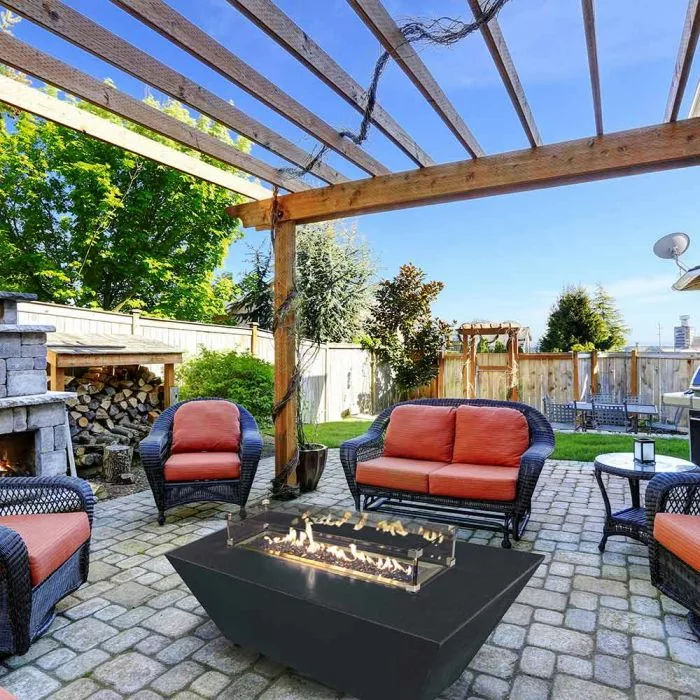
Gas Fire Pits and Fire-Pit Tables: How to Choose the Right One
Table of Contents
Introduction
Gas fire pits provide a clean, controllable flame without the smoke, ash and regular cleaning associated with a wood-burning fire. They can create an attractive focal point and make a patio or outdoor seating area more inviting during cooler evenings.
The category includes several different arrangements. A small number of models are specifically designed to sit on an existing outdoor table. Other compact gas fire pits are intended for installation on the ground, a pedestal or another substantial outdoor structure. Raised planter bases, built-in walls and poolside hardscaping may also provide suitable locations when they have been designed for the purpose and the complete installation meets the appliance manufacturer’s requirements.
Complete fire-pit tables incorporate the burner and controls into a piece of outdoor furniture. Custom installations go further by building the burner into a purpose-made concrete, masonry or cast-stone structure. These products differ considerably in size, heat output, fuel arrangement, portability and price.
A compact gas fire pit should not be placed on an ordinary table simply because the table appears strong enough. Its stability, heat resistance, dimensions and required clearances must all be suitable for the appliance. The manufacturer’s installation instructions must be followed, and custom structures may also require assessment by the contractor, gas installer or other qualified person responsible for the work.
During my years working with cast stone and outdoor fireplace projects, I designed and manufactured exterior cast-stone tabletops with substantial Corinthian and Temple of the Winds-style bases. Some were intended to accommodate fire features, with their suitability and the appliance installation approved by the professionals responsible for that part of the project.
I have also seen gas fire pits and fire-pit tables used alongside larger outdoor gas or wood-burning fireplaces. On a large patio, people seated around a table may be too far from the main fireplace to benefit from much of its heat. A suitably positioned fire pit can provide localized warmth around the seating area while creating an attractive central flame.
This guide explains the main types of gas fire pits and fire-pit tables, their advantages and limitations, the available fuel options and the practical points to check before buying one. It will help you decide whether you need a decorative tabletop flame, a compact fire pit for an approved structure, a source of localized warmth or a complete fire-pit table around which people can gather.
I/We promote transparency. This post or site may contain affiliate links. This means only if you make a purchase through these links, not just by clicking, I/we may earn a small commission at no extra cost to you.
As an Amazon Associate, I earn from qualifying purchases
Wood-Burning Fire Pits for Tabletop Use
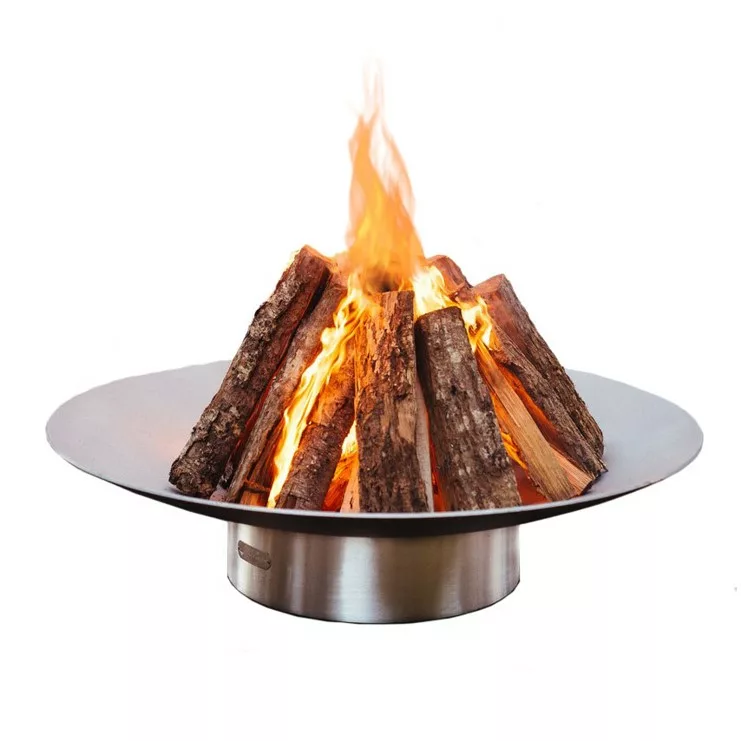
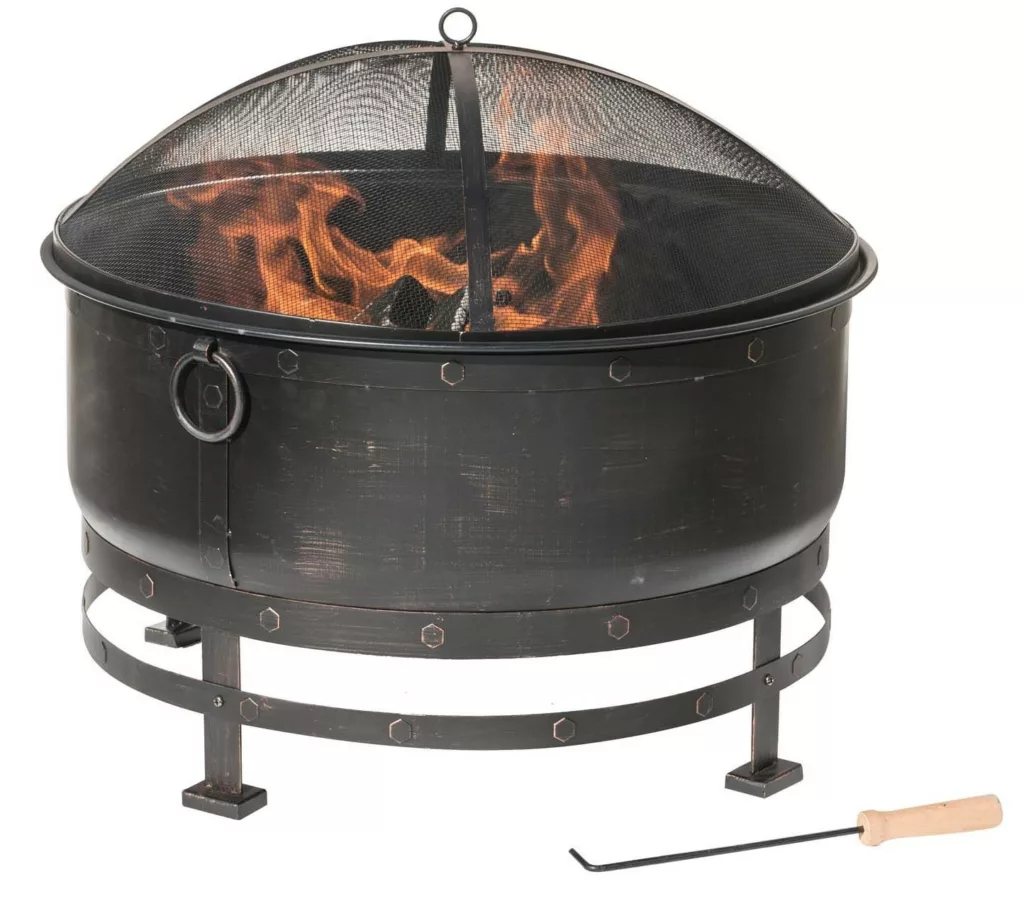
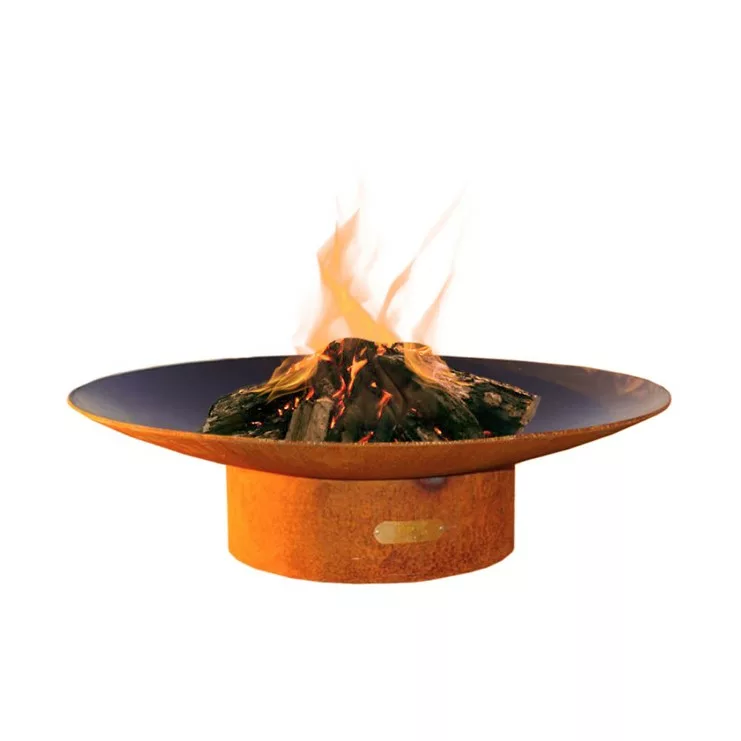
Not everyone searching for tabletop gas fire pits will want a gas model. The three compact wood-burning fire pits below are well suited to substantial, heat-resistant tabletops as well as paved patios. Some can also be supplied with an optional metal tabletop, creating a complete freestanding arrangement. Each image links directly to the relevant product page.
Safety Comes First
All gas fire pits combines an open flame with pressurized fuel. I have personally seen the serious consequences of a propane accident, so the safety guidance in this article should not be treated as a formality.
Only use a gas fire pit outdoors in the open, well-ventilated location specified by its manufacturer. Place it on a stable, heat-resistant surface and maintain the required clearance from furniture, buildings, overhanging materials and anything else that could burn. Do not assume that every patio or dining table is suitable.
Before lighting, inspect the cylinder, hose, regulator and connections for damage or leakage, following the appliance manufacturer’s instructions. Keep propane cylinders upright. If you smell gas, hear hissing or suspect a leak, do not light the appliance or create a spark. Shut off the gas only if it is safe to do so, move away and have the equipment checked before using it again.
The Main Types of Tabletop Gas Fire Pits and Fire-Pit Tables
Compact and Portable Tabletop Gas Fire Pits
Only a limited number of compact gas fire pits are specifically designed to sit on an existing outdoor table. Other portable models are intended for the ground, a pedestal or a suitable purpose-built structure.
Depending on the model, they may use a small 1-pound propane cylinder or connect by hose to a larger refillable cylinder positioned nearby. Their size generally makes them easier to move and store than a complete fire-pit table.
Where tabletop use is permitted, the supporting table must meet the appliance requirements for stability, heat resistance, size and clearance. A suitable heat-resistant mat may provide additional surface protection, but it cannot make an unsuitable table safe.
Gas Fire-Pit Tables
A gas fire-pit table is a complete piece of outdoor furniture with a burner built into its center. Many propane models conceal the cylinder inside the base, while natural-gas versions connect to a permanent gas supply.
These tables usually have larger burners and higher heat outputs than compact portable models. They also provide space for people to sit around the flame. Some include a removable burner cover that creates additional table space when the burner is switched off and completely cool.
Some propane fire-pit tables have concealed casters or suitable wheels beneath the base, making them easier to reposition as seating arrangements change. Check the weight and method of moving the table before buying, because not every model is easily portable.
Only move a fire-pit table when it is switched off and completely cool. Close the propane cylinder valve and make sure the cylinder is properly secured before moving the unit. A table connected to a permanent natural-gas supply should not be treated as portable.
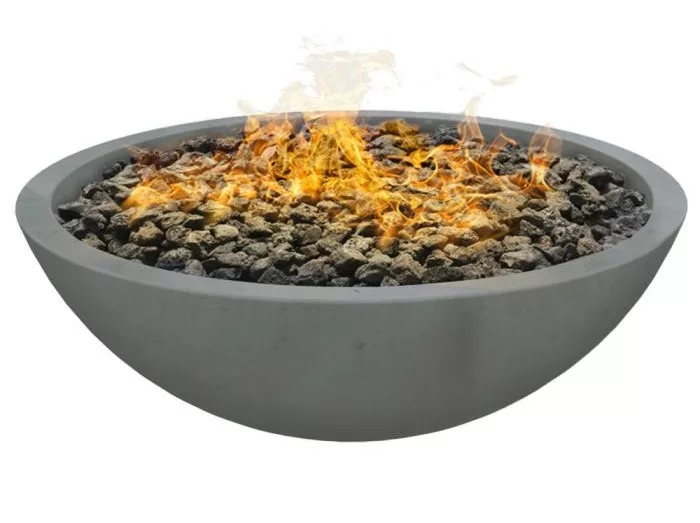
Built-In and Custom Fire Tables
A gas burner can also be incorporated into a purpose-built concrete, masonry or cast-stone table. This provides greater control over its size, shape and finish, but it creates a largely permanent feature.
From a contractor’s point of view, the installation must be planned much like a built-in firebox. The contractor will need the selected burner’s installation manual, dimensional drawings, clearances, ventilation requirements and service-access details well before construction begins. Manufacturers normally provide this information, but it must relate to the exact burner and control system being installed.
The contractor should also be told which structural and finishing materials will be used. The thickness, weight, combustibility and heat resistance of stone, tile, cast stone, render or other finishes can affect the dimensions, supporting structure and construction of the enclosure.
Its position should be planned as carefully as the position of an outdoor fireplace. Once you have selected your preferred location, discuss it with your contractor and qualified gas installer before making the final decision. They may identify technical or code-related considerations that are not immediately obvious.
Consider the seating arrangement, safe clearances, foot traffic, prevailing wind and route of the gas supply. Access must be provided to the controls, shut-off valve, burner, connections and any electrical components for inspection and future maintenance.
Permanent installations are subject to local building, gas and possibly electrical requirements. Depending on the selected system and enclosure, these may affect:
- The size and position of ventilation openings.
- Drainage within or beneath the enclosure.
- Gas-line size and routing.
- The location of the emergency shut-off valve.
- Electrical supplies used for electronic ignition.
- The position of nearby electrical outlets and other services.
- Access for inspection, repair and replacement.
For example, a manufacturer may require low-level ventilation openings on opposing sides of the enclosure so that heat or unburned gas cannot accumulate. A nearby electrical outlet may also need to be relocated or protected to comply with the required clearances. These details should be resolved before the table is built, not after the finishes have been applied.
Once a substantial custom fire table and its gas supply have been installed, moving it may be difficult or completely impractical. Getting its position right at the planning stage is far easier than trying to alter it later.
The burner, ventilation, drainage, heat-resistant materials and gas installation must comply with the manufacturer’s instructions and applicable local requirements. A custom fire table should not be regarded as merely a decorative container for a burner. It is a permanent outdoor gas appliance installation and must be designed accordingly.
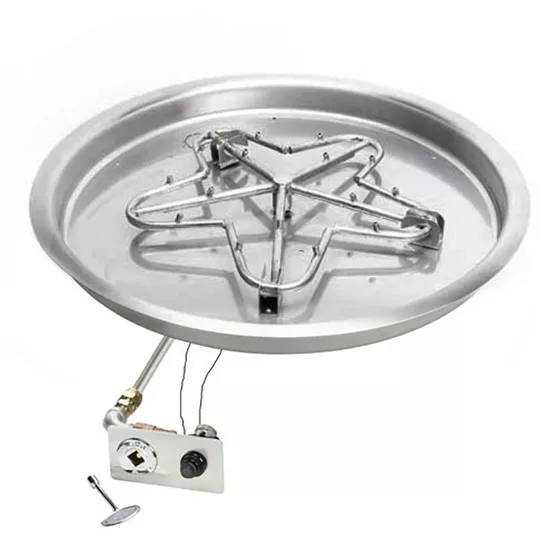
Choosing the Right Size and Heat Output
Begin by deciding what you want the fire pit to do. A small tabletop model may be enough to provide an attractive flame and some warmth for two or four people. A larger fire-pit table is more suitable when several people regularly gather around it or when localized heating is an important part of the decision.
Allow Enough Usable Space
For a genuine tabletop model, check the overall dimensions of both the appliance and the supporting table. There should be enough usable space without placing people, plates, glasses or loose clothing too close to the flame.
With a complete fire-pit table or custom installation, consider the width of the ledge around the burner. Some attractive designs provide very little practical table space once the fire is operating.
For gas fire pits positioned on pedestals or other structures, consider the surrounding seating, required clearances and walking routes. The installation should not force people to pass unnecessarily close to the flame.
Consider Heat Output When Choosing Gas Fire Pits
Heat output is normally stated in British Thermal Units, or BTUs. A higher BTU rating generally indicates greater potential heat output, but the largest number is not automatically the best choice.
The warmth people actually feel will also depend on:
- How close they are sitting to the burner.
- The size and shape of the table.
- Outdoor temperature and wind.
- Whether the area is open or partially sheltered.
- The burner design and flame setting.
- The seasons and typical temperatures in which it will be used.
Choose a heat output that suits the intended seating area and the type of installation. Too little output may provide little more than a decorative flame, while excessive heat can make the surrounding seats uncomfortable to use.
Choose a Shape That Suits the Seating
Round and square gas fire pits and fire-pit tables work well when people sit evenly around all sides. Rectangular designs are often better beside outdoor sofas or longer seating arrangements. A long linear burner can distribute the flame across a wider area, while a central round burner creates a more traditional focal point.
Before buying a complete unit or planning a custom installation, measure the available space with the chairs pulled out and occupied. Leave clear walking routes around the fire feature and maintain all clearances specified by the appliance manufacturer.
Consider the Materials and Finish
Gas fire pits, complete fire-pit tables and custom installations are available in metal, concrete, masonry, cast stone and various composite materials.
Check the weight, weather resistance, heat resistance and maintenance requirements. Lightweight products are easier to move, while heavier concrete or cast-stone designs generally need a more permanent position and a suitably strong, level base.
If the fire pit will be used near the ocean, confirm that its materials and finishes are suitable for a coastal environment. Salt-laden air can accelerate corrosion, so check the burner, frame, fasteners and internal components as well as the visible outer finish. Also check whether coastal exposure affects the manufacturer’s warranty or recommended maintenance.

Propane or Natural Gas?
Most portable gas fire pits, including compact tabletop models, use propane because it allows the appliance to be moved without requiring a permanent gas connection. Larger fire-pit tables and built-in installations may be available for either propane or natural gas.
The right choice depends on where the fire pit will be used, how often it will be operated, whether portability is important, and whether natural gas is already available at the property or can be connected at a reasonable cost.
Small Propane Cylinders
Some compact tabletop models use small 1-pound propane cylinders. These are relatively easy to carry and change, and the cylinder may be concealed within the appliance or connected directly beneath it.
Their main limitation is operating time. A small cylinder will need changing more frequently, particularly when the fire pit is used at a higher flame setting. Before buying, check the expected operating time, cost, and local availability of replacement cylinders.
Only use the cylinder type specified by the manufacturer. Never attempt to refill a disposable cylinder. Refillable cylinders should only be refilled in accordance with the manufacturer’s instructions and local regulations.
Unwanted cylinders must be disposed of responsibly. Never place a propane cylinder in ordinary household trash. Contact a local disposal program or propane retailer for instructions.
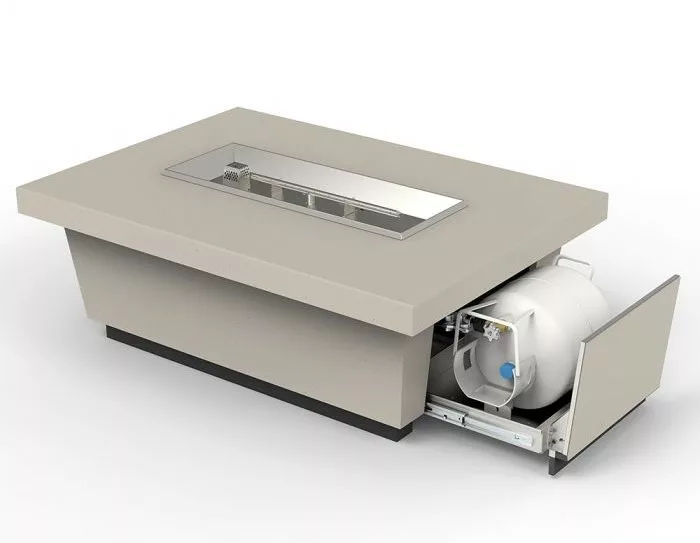
Larger Refillable Propane Cylinders
Many complete fire-pit tables use a larger refillable propane cylinder, commonly the 20-pound size used with outdoor grills in the USA. These provide longer operating times and can usually be refilled or exchanged locally.
Check how the cylinder is fitted before choosing the table. Some models have a sliding tray or wide access door, making the cylinder relatively easy to remove. Others require it to be lifted through a narrow opening or maneuvered around internal components.
Points to check include:
- The size and weight of the required cylinder.
- Whether it can be exchanged or refilled locally.
- How easily it can be lifted into position.
- Whether the valve and connection can be reached and inspected.
- Whether the cylinder tray slides out.
- Whether tools are needed to change it.
- Whether the cylinder is concealed within the table or positioned separately.
- The estimated operating time at different flame settings.
A fire-pit table may look attractive in photographs but become inconvenient to use if changing the cylinder is awkward and time-consuming. Always switch off the appliance, close the cylinder valve and allow the fire pit to cool completely before changing a cylinder. Make the connection outdoors, away from flames and other ignition sources, and follow the manufacturer’s instructions for inspecting and leak-testing the connection.
Natural Gas
Natural gas can be a practical choice for a permanently positioned fire table. It removes the need to lift, exchange, and store propane cylinders, and the fire pit remains ready to use whenever required.
The disadvantage is that the table becomes tied to the gas-supply position. Installing or relocating the gas line may also add significantly to the initial cost. This work will normally need to be completed by a qualified or licensed gas installer, according to local requirements.
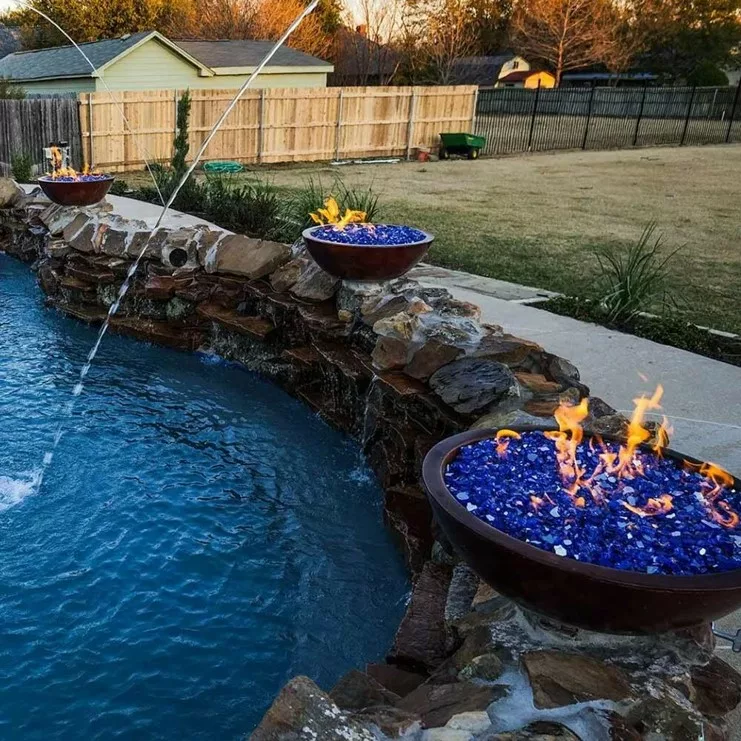
Natural gas comes into its own when one or more permanently installed fire pits are incorporated into a larger landscape design. It can also work particularly well for combined fire-and-water features, which, in my experience, can create striking effects in almost any outdoor setting.
The burner must be designed or correctly converted for natural gas. A propane burner should never simply be connected to a natural-gas supply, or vice versa. The gas-line size, pressure, shut-off position, and installation must meet the manufacturer’s specifications and applicable local requirements.
If you are also considering a feature that combines flame with moving water, our cast stone water fountain guide includes fire-and-water bowls, spillways and the practical planning involved.
Features and Accessories Worth Checking
The accessories supplied with a gas fire pit or fire-pit table can affect its safety, convenience, and long-term value. Check what is included before comparing prices, because items shown in product photographs may sometimes be optional extras.
Ignition and Flame Control
Check how the fire pit is lit and how easily the flame can be adjusted. Depending on the model, ignition may be manual, push-button, battery-powered, or electronic.
The controls and gas shut-off should be easy to reach without placing a hand close to the burner. Also check whether replacement ignition components and other spare parts are readily available. Ignition systems and exposed metal components can deteriorate more quickly in coastal areas, where salt-laden air encourages corrosion.
If the ignition system uses replaceable batteries, inspect them regularly and consider removing them when the fire pit will remain unused for an extended period. Batteries left in place can leak and corrode the contacts, potentially damaging the ignition system.
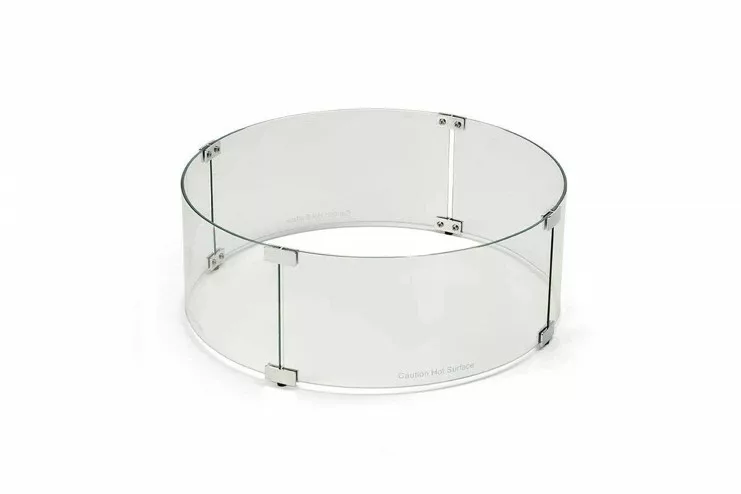
Glass Wind Guards
A glass wind guard is worth considering, particularly if the fire pit will be used in an exposed area. It surrounds the flame, helping to keep it steadier in a light breeze, and creates some separation between the flame and anything placed on the table.
Remember that the glass itself becomes extremely hot. It should never be touched or treated as a protective screen for children or pets. Choose a guard made for the particular fire pit and always maintain the clearances specified by the manufacturer.
Burner Lids and Table Inserts
Some fire-pit tables include a removable lid that fits over the burner, creating additional usable table space when the appliance is not operating.
Burner lids are commonly made from aluminum or stainless steel. Some fire tables have a matching porcelain or composite lid. However, the lid may be an optional extra rather than part of the standard package, so check what is included before buying.
Do not fit the lid until the burner and fire media are completely cool. Check where it can be stored while the fire is being used, because a large or heavy lid can be awkward to handle and easily damaged if left in an unsuitable place.
Weather Covers
A fitted weather cover helps protect the burner, ignition system, controls, and outer finish when the fire pit is not in use. It is particularly worthwhile when the unit will remain outside throughout the year.
Allow the appliance to cool completely before covering it, and follow the manufacturer’s instructions. The cover should not trap moisture around the burner or internal components for long periods. It cannot prevent all deterioration over time, but it can considerably reduce exposure to rain, dirt, and other weather-related damage.

What Is Fire Media?
Manufacturers use the term “fire media” for the heat-resistant materials placed in and around the burner area. Depending on the appliance, this may include fire glass, lava rock, ceramic stones, ceramic coals or specially made ceramic logs.
The fire media helps conceal the burner and changes the appearance and distribution of the flame. Some types also absorb heat and continue radiating it after the flame has been switched off, so they can remain dangerously hot for some time.
Fire media is not interchangeable between every appliance. A burner designed for fire glass may require a particular size and depth, while ceramic logs may need to be positioned in a specific arrangement to avoid obstructing the flame.
Only use the type and quantity of fire media supplied or approved by the manufacturer. Do not substitute ordinary stones, glass, gravel or decorative materials. Do not overfill the burner pan or block burner openings, ignition components, drainage holes or ventilation.
Protective Mats
A suitable heat-resistant mat can help protect the table or surface beneath a portable fire pit. Check that the mat is rated for the temperatures and type of appliance involved and that it is large enough for the intended installation.
A protective mat does not override the fire-pit manufacturer’s surface or clearance requirements. It should be regarded as additional protection, not a way of making an unsuitable table safe.
Replacement Parts and Warranty Support
Before buying, check the warranty and availability of replacement regulators, hoses, ignition components, burner lids and other model-specific parts.
This is particularly important with a more expensive fire table. A well-supported model that can be repaired may provide better long-term value than a cheaper product with no available parts.
Why I Have Included Spotix
I originally became familiar with Spotix when purchasing fireboxes for indoor and outdoor fireplace projects. My involvement went considerably beyond ordering the firebox. I selected suitable units, presented the options to clients and purchased the chosen firebox before designing and constructing the buildout around it.
The buildout was the framed enclosure that accommodated the firebox, flue and required clearances. Depending on the building and fireplace design, it could continue from floor level through the full height of the room and into the ceiling or roof space. Some of the fireplaces I worked on were between 22 and 30 feet high.
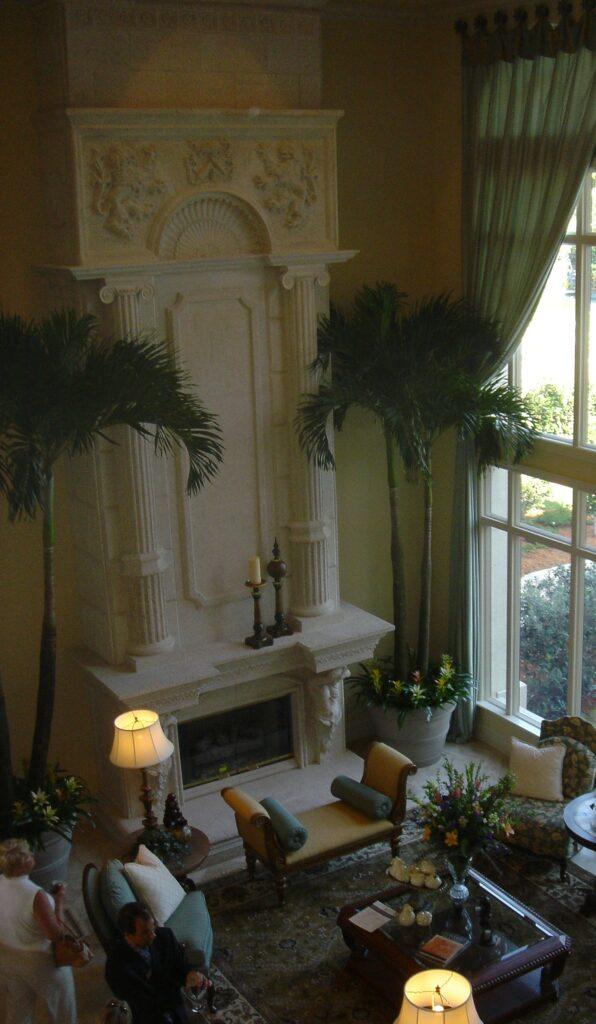
The finished fireplace was then clad, applied or stacked over this buildout. On some projects, the upper section was finished in drywall. On others, the decorative stone, cast-stone or masonry finish continued for the full height of the fireplace. The gas and electrical connections were completed by the appropriate qualified trades.
That previous purchasing and construction experience is why I am comfortable including Spotix as a specialist supplier in this guide. Its current website offers a much larger selection of fire pits, fire tables, burners, fireboxes and accessories than it did when I first used the company.
I have not personally worked with every product mentioned below. The individual examples have been selected from current published specifications to illustrate the different options available.
Two Options to Consider For Gas Fire Pits
These two products illustrate the difference between a small tabletop flame and a complete fire-pit table. They have been selected from current published specifications. I have not personally installed or used either particular model.
Product specifications and availability can change, so check the current manufacturer’s information before ordering.
A Compact Tabletop Option
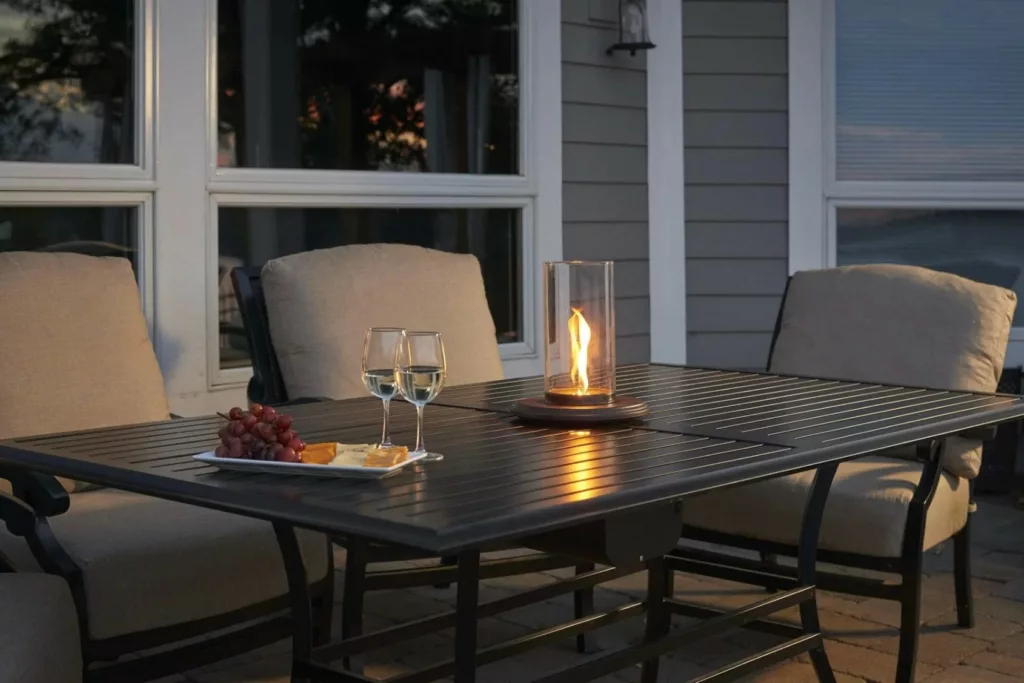
One small option sold by Spotix is the Intrigue Table Top Outdoor Lantern, manufactured by The Outdoor GreatRoom Company.
The unit fits into the existing umbrella hole in a suitable outdoor table. This supports the fire pit securely without requiring the complete table to be replaced.
It uses a 1-pound propane cylinder and produces up to 3,000 BTUs. This makes it primarily an attractive tabletop flame rather than a substantial patio heater. Spotix states that one cylinder can provide up to eight hours of use, although actual operating time will depend on the flame setting and conditions.
Points worth noting include:
- Fits table umbrella openings approximately 1.5 to 4 inches in diameter.
- Uses a small 1-pound propane cylinder.
- Compact 10-inch-diameter base.
- Tempered-glass surround.
- UL listed.
- Made in the USA.
This model could suit someone who already owns a suitable patio table and wants an attractive flame without replacing the complete table. It would not be my first choice where significant localized heating is the main objective.
A Complete Fire-Pit Table
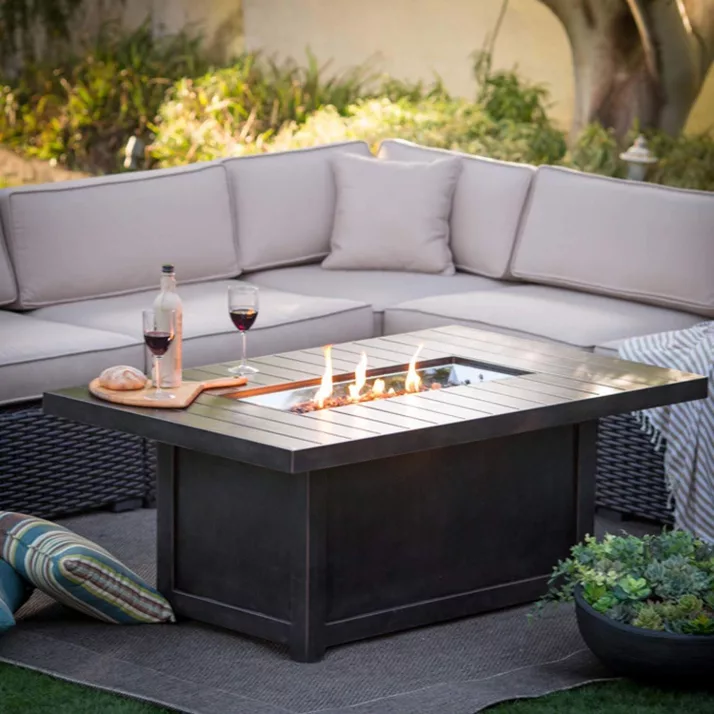
The Napoleon St. Tropez is a complete rectangular fire-pit table designed to provide both usable table space and localized heat.
Its stainless-steel burner produces up to 60,000 BTUs. The aluminum table conceals a standard 20-pound propane cylinder inside its base, avoiding the need for a separate cylinder cover or a visible hose running across the patio.
Points worth noting include:
- 60,000-BTU heat output.
- Concealed standard 20-pound propane cylinder.
- Stainless-steel burner tray.
- Aluminum table construction.
- 24-inch chat height.
- Adjustable flame.
- Natural-gas conversion components included.
- CSA certified.
I have not personally installed this particular type of complete fire-pit table. My outdoor living projects have included designing, building, and installing outdoor fireplaces, as well as helping clients consider fire pits as a secondary heat source and focal point within the surrounding landscape. Gas and electrical connections were always completed by the appropriate qualified trades.
A complete fire-pit table is a considerably larger investment than a small tabletop unit, but it provides a very different level of heat and functionality.
Using a Gas Fire Pit Safely
The earlier warning explains why safety must be considered before choosing any gas fire pit or fire-pit table. The following information covers the main dangers and the checks that should become part of its normal use.
Why Ventilation Matters
Any gas fire pit can produce carbon monoxide, usually abbreviated to CO. This is the same poisonous gas detected by the carbon monoxide alarms commonly installed in American homes.
Carbon monoxide is colorless and practically odorless. It can be produced when propane or natural gas does not burn completely. In an open outdoor area it can disperse, but in an enclosed or poorly ventilated space it may accumulate without anyone realizing it.
Exposure can cause headaches, dizziness, weakness, nausea and confusion. Higher concentrations can cause unconsciousness or death.
Gas cooking appliances provide a useful comparison. A gas range is designed and certified for indoor use, and the kitchen should have appropriate ventilation. Even then, a badly adjusted or poorly ventilated gas burner can produce carbon monoxide.
A complete outdoor fire table may produce 50,000 or 60,000 BTUs, which is considerably more than a single gas-cooker burner. Unlike an indoor appliance, it is designed to release its heat and combustion gases into an open outdoor area. Moving it indoors or surrounding it with walls and screens changes the conditions in which it was designed to operate.
A carbon monoxide alarm is an important household safeguard, but it does not make it safe to operate an outdoor fire pit inside a building or inadequately ventilated enclosure. The appliance still needs open airflow so combustion gases can disperse.
A propane leak creates an additional danger. Propane is heavier than air and can collect in low or enclosed areas, where it may ignite and cause a fire or explosion.
Before Lighting
Read the instructions supplied with the particular appliance. Do not assume that the lighting procedure, clearances or fuel connections are the same for every model.
Before each use:
- Check that the fire pit is stable and level.
- Remove leaves and other combustible materials from the surrounding area.
- Inspect the hose, regulator, cylinder and visible connections for damage.
- Make sure ventilation and drainage openings are clear.
- Check that the approved fire media has not moved and blocked the burner or ignition system.
- Confirm that the burner lid and weather cover have been removed.
Propane connections should be checked for leaks whenever a cylinder is connected and as directed by the manufacturer. Never use a flame to search for a gas leak.
I have often used a spray bottle containing a solution of soap and water for this check. Apply the solution around the valve and connection, slowly open the cylinder valve and watch for expanding bubbles. If bubbles form, close the valve and do not use the appliance until the leak has been corrected and the connection has passed another test.
Lighting and Relighting
Follow the manufacturer’s lighting sequence exactly. Do not allow gas to flow for an extended period before operating the ignition.
If the burner does not light, turn off the gas and wait for it to disperse before trying again. Use the waiting time stated in the manufacturer’s instructions. Repeated ignition failure, an unusual flame or excessive soot may indicate a problem that needs professional attention.
While the Fire Pit Is Operating
Never leave an operating fire pit unattended. Keep children and pets supervised and prevent anyone from touching the glass guard, fire media, burner area or surrounding surfaces.
Avoid loose clothing and do not reach across the flame. Keep paper, table decorations, napkins, food packaging and other combustible items away from the burner.
Do not cook on a tabletop gas fire pit unless the manufacturer specifically states that it is designed for cooking. Grease, falling food and unsuitable utensils can damage the burner or create an additional fire risk.
Do not move the appliance while it is operating or still hot. Stop using it if strong winds begin to disturb the flame or blow heat toward people or combustible materials.
Shutting Down
Turn off the burner using the appliance controls and close the propane cylinder valve where applicable. Allow the burner, glass guard, fire media and surrounding surfaces to cool completely before fitting a burner lid, weather cover or moving the appliance.
Fire media can remain hot after the visible flame has been extinguished. Make sure everyone around the table understands this.
If You Suspect a Gas Leak
A propane odor, hissing sound, visible vapor or unexpected flame near the cylinder can indicate a leak.
Do not attempt to light the fire pit or operate anything that could produce a flame or spark. Shut off the cylinder valve only if it is safe to do so, move everyone away and contact the propane supplier, fire department or emergency services as appropriate.
Do not use the appliance again until it has been inspected and confirmed safe by a qualified professional.
Storing Propane Cylinders
Keep propane cylinders upright, with the valve closed, in a suitable outdoor location away from ignition sources and excessive heat. Do not store cylinders in a house, basement, garage, shed or other enclosed area.
Do not keep a spare cylinder beneath or immediately beside an operating propane appliance unless the appliance is specifically designed to house another cylinder.
For further information on transporting, storing, checking and disposing of propane cylinders, consult the Propane Education & Research Council’s current safety guidance. It is a very useful resource.
Frequently Asked Questions About Gas Fire Pits and Fire-Pit Tables
Do gas fire pits provide much heat?
Some do, but heat output varies considerably. A small 3,000-BTU tabletop flame is mainly decorative, while a complete fire-pit table producing 50,000 or 60,000 BTUs can provide useful localized warmth. Check the stated BTU output and consider how close people will be sitting.
Can I place a compact gas fire pit on any outdoor table?
No. The table must be stable and suitable for the size, weight, and heat output of the appliance. Follow the fire-pit manufacturer’s requirements for supporting surfaces and clearances. A heat-resistant mat can provide additional protection, but it does not make an unsuitable or combustible table safe.
How long will a propane cylinder last?
Operating time depends on the cylinder size, BTU output, and flame setting. A small 1-pound cylinder may power a low-output tabletop flame for several hours, while a complete gas fire-pit table normally uses a larger refillable cylinder. Use the manufacturer’s estimate for the particular model.
Can I use a gas fire pit beneath a covered patio?
A gas fire pit can produce carbon monoxide, which must be allowed to disperse into the open air. A roof combined with walls, screens, or restricted airflow can create a partially enclosed space where combustion gases accumulate.
Never use an outdoor fire pit indoors or in an enclosed area. For a covered patio, lanai, or pergola, consider the amount of genuinely open ventilation, the required overhead and side clearances, and the manufacturer’s instructions for the particular appliance. A carbon monoxide alarm is not a substitute for adequate ventilation.
Can a propane gas fire pit be converted to natural gas?
Only when the manufacturer provides or approves a conversion kit for that particular model. Propane and natural-gas systems operate at different pressures and require the correct components. Any conversion and permanent gas connection should be completed by a qualified professional.
Can I cook on a gas fire pit?
Not unless the manufacturer specifically states that the appliance is designed for cooking. Ordinary gas fire pits may be damaged by grease, falling food, or unsuitable cookware, and their burners and fire media are not necessarily intended for food preparation.
Conclusion
A gas fire pit can provide anything from a small decorative flame to useful localized heat around an outdoor seating area. The first step is deciding what you expect it to do and how many people will normally sit around it.
A compact portable model may be sufficient for an existing patio table, while a complete gas fire-pit table provides more heat and usable table space. A built-in or custom installation offers greater control over the design, but its location, construction details, ventilation, and gas supply must be planned carefully before work begins.
Compare the heat output, fuel arrangement, cylinder access, usable table space, materials, included accessories, and availability of replacement parts. Most importantly, choose an appliance that suits the location and can be operated safely with adequate ventilation and the correct clearances.
A well-chosen gas fire pit can extend the time spent outdoors and provide warmth exactly where people are sitting, even when a larger outdoor fireplace is too far away to heat that part of the patio effectively.
Whether you choose a compact tabletop model, a complete fire-pit table, or a custom installation, take your time and choose one that genuinely suits the way you use your outdoor space. Get the practical and safety details right, and it can become a welcoming focal point that you, your family, and your friends enjoy for many years.
I hope you find our post on Gas fire pits useful in your research for the right one for your project. If you have any questions or comments, please contact us. Thank you.
Author
Robby
Craft It All
This is such a fantastic guide! I love how you highlight the versatility of tabletop fire pits they truly are perfect for creating that cozy ambiance while being practical for smaller spaces like patios and balconies. The mix of style options, especially the cast stone designs, really allows anyone to match their aesthetic. I also appreciate the breakdown of fuel types. It’s so helpful to consider the pros and cons of each, especially for those who may be torn between the charm of a wood-burning pit and the convenience of gas or gel. Thanks for sharing such a thorough and informative post!
Hi kavitha,
Thank you for your comments, I still think the long burning artificial log is the best if you can put it in your budget and catch them on a sale price.
Robby